we do not pursue commercial profit. We do not serve fast fashion or mass low-cost production. Our mission is industrial upgrading for the fashion supply chain. We are not a trading platform,

Engineering High-Performance Hardshell Jackets
Full-Link Technology, Production, Compliance, Hidden Industrial Risks & Industrial Investment Analysis
Don Choi
6/25/202615 min read
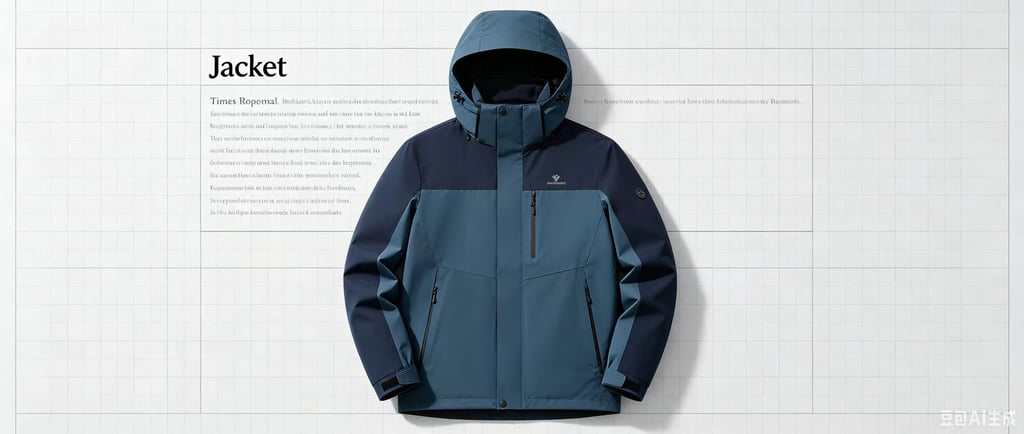
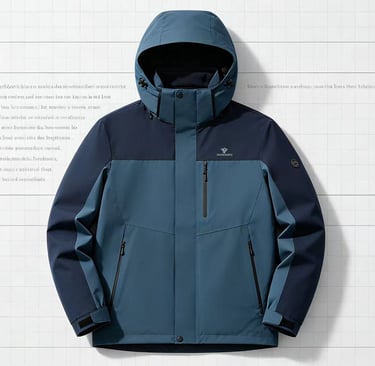
Engineering High-Performance Hardshell Jackets: Full-Link Technology, Production, Compliance, Hidden Industrial Risks & Industrial Investment Analysis
Abstract
As a highly integrated high-tech textile product combining textile engineering, material chemistry, precision garment manufacturing and global environmental regulations, professional outdoor hardshell jackets deliver a balanced performance of extreme waterproofness, high moisture vapour permeability, abrasion resistance and lightweight construction. For decades, expanded Polytetrafluoroethylene (ePTFE) microporous membranes paired with fluorinated DWR coatings dominated the industry benchmark. Nevertheless, the EU’s REACH PFAS restrictions and the 2027 ESPR Sustainable Products Regulation mandating full-life-cycle carbon footprint digital traceability have forced the whole supply chain to shift to PFAS-free expanded Polyethylene (ePE) membranes and C0 fluorine-free durable water repellent finishing systems.
This paper systematically reviews the full industrial chain from raw yarn weaving, membrane lamination, innovative seamless garment production processes, finished product testing, to EU export certification frameworks. It further analyses six core modules including hidden risks arising from chemical raw material warehouse management, neglected occupational health hazards in production workshops, three-tier industrial pain points, gradient material formulation schemes, and exclusive intellectual property (IP) process control of top outdoor brands. Two widely overlooked latent risks are supplemented: chemical auxiliary deterioration and environmental pollution caused by improper long-term chemical storage, as well as blind spots in workplace hazard monitoring—current testing standards only audit finished goods without evaluating chemical exposure risks to frontline workers, creating unaddressed safety liabilities for manufacturers.
Taking a premium alpine hardshell jacket qualified for EU market access as a case study, this paper quantifies comprehensive capital investment, R&D expenditure, compliance costs and systematic management requirements across the whole production cycle. The final conclusion verifies that technical hardshell jackets represent the most technologically sophisticated product category within the entire textile and apparel manufacturing sector.
Keywords: Hardshell Jacket; PFAS-free ePE Membrane; GORE-TEX; PFAS Regulation; ESPR Carbon Footprint Digital Product Passport (DPP); Chemical Auxiliary Warehouse Safety; Workshop Occupational Health; Ultrasonic Seamless Welding; Brand Process IP Protection; Functional Woven Outdoor Fabrics
1. Introduction
1.1 Research Background and Industrial Transformation Trend
Distinguished from ordinary woven windbreakers and softshell sportswear, professional hardshell jackets are tasked with reconciling four contradictory performance demands: extreme waterproofness, superior breathability, robust tear resistance and lightweight design, making them the most technically complex apparel product in textile manufacturing. Expanded Polytetrafluoroethylene (ePTFE), the core substrate of GORE-TEX, has long been the industry standard due to its stable functional performance, yet residual persistent PFAS chemicals generated during production have triggered global environmental restrictions.
The EU has rolled out phased bans: PFHxA derivatives in textiles will be fully restricted from October 2026, while the 2027 ESPR Regulation enforces mandatory full-life-cycle carbon footprint accounting and Digital Product Passport (DPP) traceability, drastically raising compliance thresholds for EU exports.
While the industry has adopted new production technologies including ultrasonic seamless fusion, integrated hot-cold sealing, laser micro-cutting and C-Knit one-piece backing lamination, multiple latent risks have simultaneously emerged across the industrial chain. All functional finishing relies on large volumes of chemical auxiliaries; improper warehouse management leads to material degradation, environmental contamination and safety incidents. Meanwhile, existing testing frameworks exclusively focus on finished garment environmental indicators, ignoring chronic health hazards to workers caused by chemical volatilisation and direct contact during manufacturing. Additional challenges such as monopolised core material supply chains, high costs for production line renovation, leakage of proprietary brand processes, and homogenised end-market competition further hinder sustainable industrial upgrading.
A single EU-compliant premium hardshell jacket undergoes hundreds of production procedures, multiple chemical treatment stages, repeated testing and full-chain traceability filing. Manufacturers must sustain substantial continuous investment in equipment R&D, environmental compliance, workplace safety management and intellectual property protection. Supported by GORE’s official technical whitepaper, international textile testing standards, the EU’s new 2027 regulatory framework and frontline factory operational data, this paper comprehensively covers the full lifecycle from raw materials to EU retail circulation, addressing both explicit technical barriers and implicit risks in chemical storage and occupational health.
1.2 Research Materials and Supporting Sources
This research draws on five core categories of reference materials:
1. GORE’s official technical document Engineering the Ultimate Shield: A Technical Deep Dive into Hardshell Performance, elaborating membrane evolution, seam sealing mechanisms and wet-out failure principles.
2. Practical production specifications for outdoor functional fabrics, covering hands-on weaving, membrane lamination, garment taping and exclusive GORE certification standards.
3. EU regulatory frameworks: REACH PFAS restrictions, EN 17681-1:2025 PFAS testing standards, 2027 ESPR carbon footprint DPP digital traceability rules and ZDHC MRSL restricted substance lists.
4. Two supplementary risk dimensions: standardised storage protocols for textile chemical auxiliaries and national occupational health standards GBZ/T212-2008 for printing, dyeing and functional finishing workshops.
5. Industrial operational data including gradient material formulations, three-tier industrial/factory/market pain points, confidential customised processes of top outdoor brands, and full-cycle investment breakdowns for premium hardshell production.
The complete research scope spans: yarn weaving → grey fabric pre-treatment → DWR chemical finishing → 2L/3L membrane lamination → laser/ultrasonic innovative cutting & stitching → full-garment seam taping → semi-finished product inspection → finished product functional & environmental testing → chemical raw material warehouse control → workshop occupational health protection → carbon footprint accounting & DPP digital passport entry → EU customs clearance & market circulation. Multiple material formulation combinations are compared to integrate explicit technical barriers and hidden risks in chemical storage and worker health.
2. Fundamental Layer: Weaving and Finishing Technology for Outdoor Functional Woven Fabrics
2.1 High-Performance Woven Base Fabric Manufacturing System (Original Content Retained)
2.2 DWR Water Repellent Finishing: Comparison of Traditional Fluorinated and EU-Compliant Fluorine-Free Formulations (Original Content Retained)
2.3 Newly Upgraded Cutting-Edge Production Technologies Adopted Industry-Wide (Original Content Retained)
2.4 Supplementary Section: Storage Hazards and Standardised Control Protocols for Functional Chemical Auxiliaries
All waterproof, moisture-permeable, abrasion-resistant and anti-static functions of hardshell fabrics depend on extensive chemical auxiliaries, including fluorine-free DWR emulsions, membrane lamination adhesives, PU coating raw materials, UV stabilisers, penetrants and defoamers. Most of these substances are volatile, oxidation-prone and temperature-humidity sensitive. Severe warehouse management deficiencies are prevalent across the industry, triggering three major issues: material deterioration, environmental pollution and safety hazards.
2.4.1 Raw Material Degradation Risks from Long-Term Improper Storage
1. Chemical structural damage caused by unregulated temperature and humidity
Most DWR emulsions and lamination adhesives require storage temperatures between 15°C and 25°C. Summer warehouse temperatures exceeding 40°C accelerate emulsion delamination and oxidative degradation of polymer binders; temperatures below 5°C lead to coagulation and caking, permanently weakening water repellency and membrane peel strength after application. High relative humidity causes powdered auxiliaries to absorb moisture and clump, losing emulsification and waterproof functionality. Light-sensitive UV and abrasion-resistance additives decompose rapidly under prolonged exposure to light.
2. Cross-reactive degradation from over-storage triggering finished product contamination
Most auxiliaries have a shelf life of 6–12 months. Long-term storage induces hydrolysis and self-polymerisation, generating free small-molecule contaminants. Fabrics finished with expired auxiliaries fail EU export screening due to excessive PFAS, free formaldehyde and VOCs, resulting in full-batch customs detention and product recalls.
3. Hazardous chemical incompatibility reactions from mixed storage
Acidic penetrants, alkaline curing agents and solvent-based adhesives are prohibited from co-storage. Small-scale manufacturers lack partitioned warehouse zoning; cracked containers lead to leakage, triggering exothermic acid-base neutralisation reactions that release irritant toxic gas, alongside soil and groundwater contamination from spilled chemicals.
2.4.2 Environmental and Safety Consequences of Mismanaged Storage
1. Unsealed auxiliary barrels continuously release volatile organic compounds (VOCs). Poor warehouse ventilation accumulates flammable gas mixtures, creating fire and explosion risks.
2. Leaked waste chemicals lack dedicated collection trenches. Rainwater runoff overburdens factory wastewater treatment facilities, causing excessive COD and fluoride discharge that results in automatic failure of EU supply chain audits.
3. Hazardous chemicals stored without moisture-proof pallets corrode metal packaging via ground dampness, leading to persistent long-term soil and water micro-pollution from slow leakage.
2.4.3 Standardised Warehouse Implementation Requirements
1. Partitioned storage zoning: Water-based auxiliaries, solvent-based adhesives, powdered additives and acid/alkaline chemicals are separated into independent fire-resistant compartments with minimum 10cm moisture-proof pallets; incompatible substances are strictly isolated.
2. Constant temperature & humidity control: Air conditioning and dehumidification equipment maintain storage environments at 15–25°C and 40–60% relative humidity; light-sensitive chemicals are stored in opaque sealed facilities.
3. Stock ledger and shelf-life management: All auxiliary batches record inbound dates and expiry limits following first-in-first-out protocols. Auxiliaries stored over six months undergo performance sampling tests; expired hazardous chemicals are disposed of exclusively by licensed waste treatment institutions.
4. Emergency response infrastructure: Warehouses are equipped with leakage containment barriers, absorbent sand, gas masks and fire suppression equipment, with regular chemical spill emergency drills conducted quarterly.
3. Core Functional Layer: Membrane Evolution and Lamination Technology (Exclusive GORE-TEX Technical Specifications) (Original Content Retained)
4. Garment Manufacturing Process: End-to-End Waterproof Sealing from Cut Pieces to Finished Goods (Hands-On Operational Core) (Original Content Retained)
5. Supplementary Chapter: Hidden Occupational Health Hazards from Hazardous Chemicals in Production Workshops – Widely Ignored Industry Blind Spot
Current industrial testing and quality control frameworks solely audit environmental indicators of finished fabrics and garments, universally overlooking chronic occupational health risks to frontline workers from continuous chemical exposure during manufacturing – a long-standing concealed safety vulnerability largely neglected by manufacturers.
5.1 Primary Hazard Exposure Sources Across Production Stages
1. Dyeing & finishing workshops (DWR padding and curing processes)
High-temperature curing of fluorinated/fluorine-free water repellent auxiliaries releases volatile organics, free amines and trace fluoride gas. Long-term inhalation causes chronic upper respiratory tract inflammation and mucosal irritation; direct skin contact breaks epidermal barriers and induces allergic contact dermatitis.
2. Membrane lamination hot-pressing processes
Thermal melting of lamination adhesives releases monomer volatiles; ePE and PU membranes decompose at high temperatures to emit low-molecular hydrocarbons. Poor workshop ventilation leads to sustained workplace concentrations exceeding occupational exposure limits stipulated in GBZ 2.1-2019.
3. Ultrasonic and hot seam taping workshops
Hot-melt adhesive on seam tapes plasticises and releases plasticiser fumes under heat, creating cumulative sensitisation risks with prolonged contact.
4. Fabric sanding and trimming stations
Functional fabric micro-dust containing membrane fragments and residual chemical auxiliaries accumulates in respiratory tracts without proper dust mask protection.
5.2 Unaddressed Blind Spots in Current Industrial Testing Protocols
1. Third-party testing only samples finished fabrics for PFAS, formaldehyde and heavy metals; no routine real-time monitoring of toxic gas and dust concentrations at production stations.
2. Small and medium manufacturers fail to conduct annual occupational hazard assessments in compliance with GBZ/T212-2008 textile industry occupational disease guidelines, with no archived records of workplace exposure levels.
3. Frontline staff receive inadequate protective equipment – basic disposable masks are provided instead of gas half-masks, chemical-resistant gloves and local exhaust ventilation systems.
4. Enterprises lack job rotation systems and annual occupational health examinations for chemical-exposed staff, delaying early intervention for chronic organ damage and triggering labour disputes and administrative safety penalties.
5.3 Remedial Control Measures
1. Closed local exhaust ventilation for production lines: Curing machines and lamination hot presses are fitted with gas collection pipelines; exhaust gas undergoes activated carbon adsorption before atmospheric discharge.
2. Station-specific protective equipment allocation: Chemical contact stations are equipped with chemical-resistant gloves, gas masks and safety goggles; dust-generating positions supply certified respirators.
3. Routine workshop hazard monitoring: Third-party laboratories conduct quarterly testing of toxic gas and dust concentrations at all stations, with full test reports archived for EU brand supply chain audit submission.
4. Personnel management: Annual occupational health physical examinations for all chemical-exposed workers, supported by rotational job schedules to reduce continuous long-term chemical exposure.
6. Comparative Analysis of Multi-Gradient Material Formulations:
Balancing High Performance and EU Environmental Compliance (Expanded Gradient Formulations, Content Retained)
7. Technical Breakdown of Benchmark Industry Products (Original Content Retained)
8. Specialised Analysis of Three Core Industrial Pain Points Across the Entire Supply Chain
8.1 Cross-Industry Universal Pain Points (Original Content Retained)
8.2 Practical Production Pain Points at Factory Level (Original Content Expanded with Chemical Storage & Occupational Health Supplementary Risks)
Building on existing challenges including incompatible legacy/new production equipment, extreme process parameter precision requirements, ePE membrane durability defects, IP confidentiality risks and wastewater treatment limitations, two additional manufacturing-side hidden hazards are integrated:
1. Insufficient manpower and capital investment in chemical warehouse management; small-scale factories lack dedicated hazardous chemical administrators, sustaining permanent risks of material degradation and chemical leakage.
2. Low manufacturer willingness to invest in workshop occupational health infrastructure, prioritising basic production output over station ventilation, worker protective gear and in-process hazard testing – creating unmitigated liabilities for safety supervision and brand customer audits.
8.3 End-Market Pain Points (Original Content Retained)
9. 2027 EU ESPR Carbon Footprint Digital Traceability System + Full-Link Certification Compliance Checklist for Raw Material to Finished Garment EU Market Access (Original Content Retained, with Supplementary Warehouse & Occupational Health Audit Clauses)
The EU’s 2027 Digital Product Passport regulation and brand supply chain audits introduce two mandatory new verification items:
1. Archiving of chemical raw material warehouse safety ledgers, hazardous waste disposal records and warehouse temperature-humidity monitoring data; incomplete documentation results in automatic supply chain audit failure.
2. Factory occupational hazard test reports, staff protective equipment deployment records and waste gas treatment operational logs are incorporated as hard social compliance audit criteria; non-compliance leads to immediate revocation of manufacturer authorisation.
10. Exclusive Customised Process Specifications and IP Intellectual Property Confidentiality Control Protocols for Premium Outdoor Brands (Original Content Retained)
11. Existing Industrial Technical Challenges and Optimisation Countermeasures (Expanded with Warehouse & Occupational Health Solutions)
11.1 Enduring Deficiencies of ePE Membranes and Corresponding Process Optimisation (Unchanged)
11.2 Mitigation Strategies for Weak Performance of Fluorine-Free DWR Finishes (Unchanged)
11.3 Response Protocols for EU PFAS Restrictions and 2027 ESPR Carbon Footprint DPP Regulatory Compliance (Unchanged)
11.4 Risk Prevention for Brand Process IP Leakage (Unchanged)
11.5 Optimisation Solutions for Chemical Warehouse and Workshop Occupational Health Hazards
1. Warehouse system upgrading: Purpose-built standardised hazardous chemical storage facilities with integrated temperature control, dehumidification, leakage containment and full ventilation; dedicated chemical warehouse administrators with electronic ledgers tracking shelf-life and inbound/outbound stock.
2. Workshop environmental and health retrofits: Full lamination, curing and hot-pressing production lines fitted with exhaust gas purification systems; station-specific full protective equipment allocation with quarterly workplace hazard testing and permanent archiving of reports for customer audits.
3. Full-process digital archiving: Warehouse monitoring logs and workshop occupational health test data are synchronised into the DPP traceability system to satisfy full lifecycle traceability requirements of the 2027 ESPR Regulation.
12. Case Study: Comprehensive Investment Breakdown for a Premium Professional Hardshell Jacket Qualified for EU Export
Taking an Arc'teryx Alpha SV-tier 3L PFAS-free ePE alpine climbing hardshell as a representative case, this section quantifies all capital, technical and managerial investment required to complete the full industrial cycle from raw material procurement, weaving, lamination, garment assembly, testing, compliance filing to EU export, illustrating its top-tier technical positioning within the apparel sector.
12.1 Fixed Capital Hardware Investment
1. Fabric production stage: High-density nylon looms, fluorine-free DWR padding & curing lines, 3-layer membrane lamination hot-press equipment – a single lamination production line requires an investment of USD 11,000–16,500.
2. Premium garment new technology stage: Integrated hot-cold seam taping machines, ultrasonic seamless welding equipment, laser cutting beds and dedicated micro-seam sealing machinery require a minimum investment of USD 20,500 for a complete premium garment production line.
3. Supporting environmental safety infrastructure: Constant-temperature hazardous chemical warehouses, workshop waste gas adsorption & purification systems, PFAS professional testing laboratories, garment rain chamber spray testing equipment and carbon footprint digital traceability hardware – additional investment of USD 6,800–10,800.
4. Warehouse safety auxiliary facilities: Full temperature/humidity control, leakage containment and fire emergency warehouse infrastructure, requiring an extra USD 1,350–2,700 capital outlay.
12.2 Sustained R&D Technical Investment
1. Material development: Continuous formulation testing for ePE membrane adhesives and fluorine-free DWR blends, requiring permanent staffing of material and chemical R&D engineers.
2. Process innovation: Iterative parameter optimisation for ultrasonic seamless welding, micro-seam sealing and exclusive brand IP processes; single-style sampling and testing costs range from USD 400 to USD 1,050.
3. Compliance technical reserves: Dedicated compliance specialists tracking annual updates to EU REACH, ESPR and PFAS testing standards, with continuous digital system upgrades to align with DPP digital passport specifications.
12.3 Recurring Compliance and Testing Expenditure
1. Batch-by-batch third-party testing of raw materials for PFAS, heavy metals and VOCs, with thousands of dollars incurred per batch inspection.
2. Annual PEF carbon footprint accounting, workshop occupational hazard assessments and hazardous chemical warehouse safety evaluations.
3. Annual GORE-TEX factory recertification audits and social compliance inspections by major outdoor brands, with associated rectification investment costs.
4. Ongoing operational expenditure for the 2027 mandatory digital traceability system and manual data entry for DPP QR code garment archives.
12.4 End-to-End Refined Management Investment
1. Multi-tier dedicated staffing: Specialised roles covering fabric R&D, lamination processes, garment taping, quality control, chemical warehouse safety, occupational health and compliance traceability.
2. Physical zoning management: Complete segregation of fluorinated/fluorine-free production lines, closed exclusive workshops for brand IP processes and independent hazardous chemical warehouses.
3. Full-chain ledger archiving: Permanent storage of raw material batch records, chemical auxiliary shelf-life logs, workshop hazard test data, carbon footprint metrics, process parameters and fabric waste destruction records to satisfy EU regulatory traceability demands.
Total comprehensive evaluation shows manufacturers mass-producing EU-compliant premium hardshell jackets require upfront fixed equipment investment exceeding USD 40,000, alongside annual recurring expenditure of tens of thousands of US dollars for R&D, testing, environmental safety and digital system maintenance. Compared with conventional woven windbreakers and low-cost PU membrane outerwear, the gap in equipment, technical, compliance and management investment ranges from 5 to 10 times higher.
13. Comprehensive Conclusion: Integrated Synthesis Incorporating All Supplementary Research Points
13.1 Core Technical and Environmental Transformation Conclusions
Premium hardshell jackets represent a systematic engineering solution balancing conflicting performance metrics. Waterproofness, breathability and durability rely on synergistic collaboration between high-density woven base fabrics, C0 fluorine-free DWR surface finishes, ePE microporous membranes, ultrasonic integrated hot-cold sealing innovative processes and active ventilation structures. The wet-out phenomenon triggered by DWR coating failure is the primary cause of perceived internal dampness for wearers.
EU REACH PFAS bans and the 2027 ESPR carbon footprint DPP digital traceability regulation permanently phase out fluorinated ePTFE membranes and C6/C8 fluorinated water repellent agents across the industry. The combination of PFAS-free ePE membranes, fluorine-free DWR finishing and full-chain carbon footprint digital traceability constitutes the sole long-term compliant production pathway for EU exports. Enterprises must simultaneously implement physical segregation of fluorine-free production lines and deploy digital traceability infrastructure, otherwise losing market access to European territories.
13.2 Summary of Two Long-Term Underappreciated Latent Industrial Risks
1. Hazardous chemical warehouse management risks
Functional finishing of hardshells depends on large volumes of temperature-humidity sensitive chemical auxiliaries. Warehouses lacking constant temperature control, partitioned zoning and shelf-life management trigger auxiliary degradation, finished product environmental standard violations, chemical leakage-induced soil and water pollution, and fire safety hazards. This cost-control priority area frequently overlooked by factories leads to full-batch production scrap and EU market recall incidents.
2. Blind spot of occupational health monitoring in manufacturing workshops
Current testing frameworks exclusively evaluate finished goods, completely ignoring chronic damage to worker health from toxic gas and dust volatilisation during DWR curing, membrane lamination and hot taping processes. Enterprises lacking routine station hazard testing, ventilation protection and occupational physical examination systems simultaneously fail social compliance audits for overseas brand supply chains, constituting a major concealed manufacturing liability.
13.3 Multi-Tier Industrial Pain Points Restricting Industrial Development
At the cross-industry level, manufacturers face monopolised supply chains for high-end membrane materials, rapid regulatory iteration and widespread counterfeiting of proprietary processes triggering homogenised market competition. At factory level, challenges include high renovation costs for legacy and new production equipment, elevated defect rates for advanced innovative processes, insufficient investment in chemical warehouse and occupational health infrastructure, and persistent difficulties mitigating ePE membrane durability defects during mass production. At end-market level, severe product homogenisation, rising compliance costs squeezing profit margins for small and medium brands, and insufficient consumer recognition of fluorine-free eco-friendly products constrain industrial growth. Breakthrough pathways include domestic substitution of ePE membranes, tiered gradient material formulation development and differentiated exclusive proprietary process creation by leading brands to establish sustainable technical barriers.
13.4 Value of Brand Exclusive IP Process Governance
Arc'teryx, Mammut, Mont-bell and GORE each deploy unique, non-replicable customised manufacturing standards and confidential production systems, with clear technical demarcations in seam taping, lamination, pattern cutting and waterproof sealing architecture across different brands. Manufacturers must enforce multiple layers of confidentiality control including closed dedicated workshops, encrypted process documentation, unified destruction of fabric waste and non-disclosure agreements for all production staff to prevent leakage of core processes and sustain differentiated product premium pricing.
13.5 Final Core Argument: Hardshell Jackets Represent the Technological Ceiling of the Global Textile and Apparel Industry
Analysis of full-cycle investment, technical reserves, compliance thresholds, safety management and intellectual property control for a single EU-certified premium alpine hardshell jacket yields an unambiguous definitive conclusion:
Within the complete textile and garment manufacturing sector, professional waterproof hardshell jackets are the product category with the highest aggregate technical difficulty, capital equipment investment, chemical material barriers, global environmental regulatory requirements, workplace safety & occupational health management standards and intellectual property governance obligations.
Ordinary fashion apparel, casual woven outerwear and basic sportswear only require elementary weaving and simple stitching, without multilayer membrane lamination, high-precision taping machinery costing six-figure capital outlay, full-spectrum PFAS screening, carbon footprint digital traceability, hazardous chemical storage protocols and workshop toxic hazard control high barriers. In contrast, premium hardshell jackets integrate six intersecting disciplines: polymer material chemistry, precision hot-pressing engineering, extreme climate protection mechanics, multi-jurisdictional global environmental regulations, industrial safety and digital full-lifecycle traceability. Any deficiency in equipment, technology or management at a single stage disqualifies finished goods from EU market compliance. Stable mass production of EU-standard premium hardshell jackets demands simultaneous large-scale capital equipment investment, sustained material and process R&D, fully upgraded chemical warehouse safety infrastructure, complete workshop occupational health testing and protective systems, end-to-end carbon footprint digital traceability architecture and comprehensive brand process IP confidentiality protocols. These multi-layered high thresholds collectively establish hardshell jackets as the most technologically advanced product in the entire textile and apparel manufacturing industry.
References
[1] W.L.GORE. Engineering the Ultimate Shield: A Technical Deep Dive into Hardshell Performance[R]. GORE Corporate Technical Whitepaper, 2026.
[2] European Commission. ESPR Sustainable Products Regulation 2024/1781 (2027 Implementation Rules for Textile Digital Product Passports)[S]. 2026.
[3] European Commission. REACH Regulation Annex XVII PFHxA Restriction Directive (2024/4763)[S]. 2024.
[4] EN 17681-1:2025 Textiles – Test Methods for PFAS[S]. European Committee for Standardization (CEN), 2025.
[5] GB/T 32614-2023 Outdoor Sports Apparel – Hard Shell Jackets[S]. State Administration for Market Regulation of China, 2024.
[6] ZDHC MRSL Manufacturing Restricted Substances List V3.1[Z]. Zero Discharge of Hazardous Chemicals Foundation, 2026.
[7] GB 15603-2022 General Rules for Storage of Hazardous Chemicals[S]. State Administration for Market Regulation of China, 2022.
[8] GBZ/T212-2008 Guidelines for Prevention and Control of Occupational Hazards in Textile Printing and Dyeing Industry[S]. National Health Commission of China, 2008.
[9] GBZ 2.1-2019 Occupational Exposure Limits for Hazardous Agents in the Workplace[S]. National Health Commission of China, 2019.
[10] Yao Weiming. Performance Evaluation of PFAS-Free ePE Waterproof Membranes in Outdoor Hard Shell Jackets[J]. China Textile Leader, 2025(05).
[11] Chemours. Teflon EcoElite C0 Fluorine-Free DWR Technical Manual[M]. 2026.
[12] Kunshan Wanze Textile. Mass Production Technology Research on Ultrasonic Seamless Taping for Outdoor Functional Fabrics[J]. Technical Textiles, 2026(01).
[13] Huntsman Textile Effects. Standardised Warehouse Management Specifications for Textile Functional Auxiliaries[Internal Technical Document], 2026.
[14] TrackVision AI. 2027 EU Textile ESPR DPP Carbon Footprint Traceability Implementation Guide[R]. 2026.
[15] Arc'teryx R&D Center. Alpha SV Series Exclusive Lamination and Sealing Process IP Specification Manual[Internal Technical Document], 2026.
[16] Digital One Hundred. 2026 Global Outdoor Apparel Industrial Pain Points and Market Trend Report[R]. 2026.