we do not pursue commercial profit. We do not serve fast fashion or mass low-cost production. Our mission is industrial upgrading for the fashion supply chain. We are not a trading platform,

Research on NAA Project Z:
A Dual-Region Confidential Intelligent Manufacturing Ecosystem for Global Gen-Z American Streetwear Independent Luxury Designers
Don Choi
7/21/202629 min read
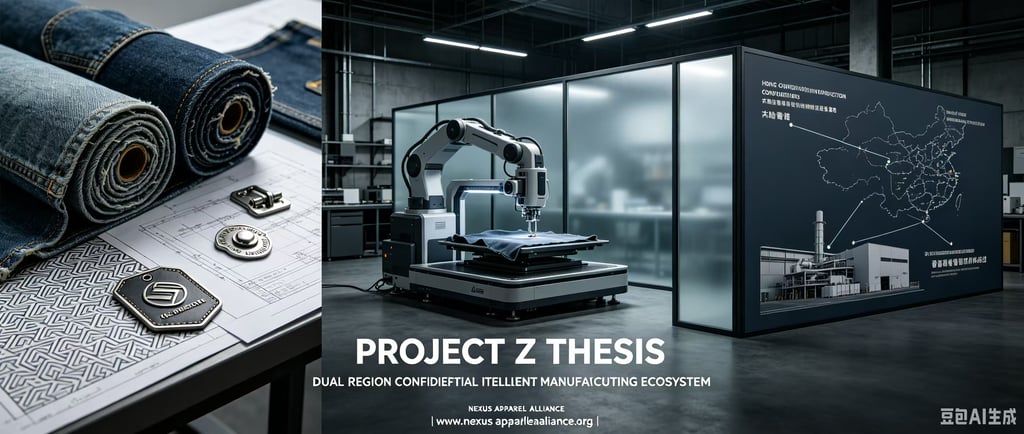
Research on NAA Project Z: A Dual-Region Confidential Intelligent Manufacturing Ecosystem for Global Gen-Z American Streetwear Independent Luxury Designers
Abstract
Against the backdrop of the rapid expansion of global Gen-Z streetwear luxury market, a large number of overseas young independent designers face severe industrial dilemmas including frequent design IP leakage, replicable mass-produced accessories, opaque factory supply chain data and unaffordable intelligent manufacturing investment. Traditional garment supply chains fail to provide customized, full-cycle intellectual property protection for small-batch high-end streetwear brands, while imported automated sewing equipment carries high licensing and maintenance costs, creating a clear market gap.
Nexus Apparel Alliance (NAA) launches Project Z, a cross-border confidential intelligent manufacturing platform in the early planning stage. The project adopts a dual-region production layout: mainland large-scale intelligent manufacturing base plus Hong Kong government grant-supported automated confidential workshop. Supported by domestically self-developed AI visual sewing robotic systems, exclusive custom fabric and private mould hardware matching technology and a premium aggregated designer community, Project Z constructs a four-pillar creator empowerment system to solve core pain points of overseas Gen-Z streetwear creators.
This paper systematically sorts out the industry pain points, theoretical basis, market demand and technical support of Project Z, carries out multi-dimensional feasibility analysis covering technology, policy, economy and market, elaborates the overall system planning, dual-region production layout and phased implementation roadmap of the project, identifies all potential operation risks and puts forward targeted response strategies, and finally summarizes the core competitive barriers and long-term development prospects of the platform. The research proves that Project Z can effectively balance the production demand of overseas original designers, domestic intelligent manufacturing resources and Hong Kong industrial upgrading policies, and provide a replicable cross-border fashion IP protection and smart manufacturing incubation model for the industry.
Keywords: Gen-Z Streetwear; Fashion Intellectual Property Protection; Intelligent Sewing Robots; Dual-Region Supply Chain; Hong Kong Industrial Subsidies; Designer Aggregation Platform
Chapter 1 Introduction
1.1 Research Background
1.1.1 Pain Points of Global Gen-Z American Streetwear Luxury Independent Designers
Gen-Z creators dominate the emerging high-end streetwear track across Europe and the United States. Different from traditional luxury groups, these startup brands feature small minimum order quantities, highly personalized original aesthetics, strong demand for exclusive vintage washing and sculpted metal hardware, and rely entirely on unique design sense to gain loyal niche consumers. However, generic garment supply chains bring four fatal hidden dangers: first, factories permanently retain complete pattern files and leak them to counterfeit merchants through free sampling services; second, standard hardware and universal washing technology have no technical barriers and can be copied within two weeks; third, factories shield all fabric consumption and residual inventory data, triggering unauthorized private bulk orders; fourth, small startups cannot bear the high cost of patent lawyers and imported automated production equipment. A large number of promising original brands shrink or disappear before scaling up due to rampant counterfeiting.
1.1.2 Universal IP Leakage Defects of Traditional Garment Supply Chain
Traditional mass-production factories take batch processing profit as the core goal without establishing standardized confidentiality management mechanisms. Unencrypted pattern storage, unrestricted circulation of defective cuttings, lack of unified NDAs for frontline workers and public mould accessories jointly form a complete design leakage channel. Existing supply chain service providers only focus on delivery cycle and unit price, and fail to build closed-loop supervision covering sample development, formal production and waste destruction, which cannot meet the IP protection needs of high-end original fashion brands.
1.1.3 Maturity of Domestic Intelligent Sewing Robotics & Hong Kong Industrial Subsidy Policy Support
In recent years, domestic textile machinery manufacturers have realized independent R&D of two core automated production solutions: full AI vision autonomous sewing lines and water-soluble fabric hardening collaborative robotic stations, which achieve the same stitching precision as overseas automation equipment at less than half of the overall input cost, and support customized encryption data architecture for high-end confidential production. Meanwhile, the Hong Kong SAR Government launches the New Industrialisation Funding Scheme and Manufacturing+ Programme, providing matching grants for intelligent production workshop construction, which creates policy conditions for building an Asia-Pacific small-batch sampling hub in Hong Kong.
1.1.4 Vacant Market: Lack of Specialized Confidential Smart Manufacturing Platform for Overseas Small-Batch Luxury Startups
At present, domestic intelligent garment factories mainly serve mass fast fashion and large domestic apparel groups, without targeted confidentiality systems and exclusive material supporting systems for Western Gen-Z streetwear designers. Overseas imported automated equipment has high long-term operation costs, and no suppliers can provide dual-region production coordination integrating mainland mass production and Hong Kong rapid sampling. Project Z fills this market blank as a dedicated creator-centric confidential intelligent manufacturing ecosystem.
1.2 Research Significance
1.2.1 Theoretical Significance
First, this paper supplements the research system of cross-border fashion supply chain intellectual property protection, and constructs a closed-loop IP supervision framework combining encrypted intelligent equipment, closed workshops and standardized waste disposal. Second, it enriches the operation theory of overseas independent designer incubation platforms, and puts forward a tiered membership profit model matched with dual-region smart production capacity. Third, it expands the application research of domestic textile robotics in high-end customized fashion fields, and analyzes the practical path of combining mainland intelligent manufacturing advantages with Hong Kong industrial upgrading subsidy policies.
1.2.2 Practical Significance
First, the complete four-pillar system planning of Project Z provides a operable anti-counterfeiting and intelligent production solution for global Gen-Z streetwear designers. Second, the light asset joint equipment cooperation mode and multi-source financing scheme composed of industrial investment and Hong Kong government subsidies effectively reduce the upfront capital pressure of smart workshop construction. Third, the serialized LinkedIn English content marketing system forms a standardized overseas creator acquisition channel, which can be referenced by similar cross-border fashion service platforms. Fourth, the risk identification and response system formulated in this paper avoids common hidden dangers in the operation of confidential production bases.
1.3 Research Content & Framework
1.3.1 Main Research Content
1. Sort out the industry development status and core pain points of overseas Gen-Z streetwear luxury brands, domestic intelligent sewing manufacturing and Hong Kong industrial subsidy policies.
2. Complete multi-dimensional feasibility demonstration of Project Z including technology, policy, economy and market.
3. Elaborate the core positioning, four empowerment pillars, intelligent robotic production system and dual-region workshop layout of Project Z.
4. Identify market, technical, policy, IP and capital risks, and design targeted coping strategies.
5. Divide the phased implementation cycle of the project and formulate scientific capital allocation standards.
6. Summarize core competitive advantages and put forward long-term sustainable development prospects.
1.3.2 Overall Thesis Structure
Chapter 1 Introduction: Research background, significance, content, methods, innovation and limitations.
Chapter 2 Theoretical Basis & Industry Current Situation Analysis: Sort out relevant theories and analyze three core industry sectors.
Chapter 3 Demand Research & Feasibility Verification: Analyze target customer demands and verify multi-dimensional project feasibility.
Chapter 4 Overall System Planning of Project Z: Core positioning, four pillars, intelligent production system and dual-region layout.
Chapter 5 Risk Identification & Countermeasure Design: Classify all operational risks and propose solutions.
Chapter 6 Phased Implementation Plan & Capital Allocation: Divide three development stages and design capital distribution ratio.
Chapter 7 Conclusion & Future Prospect: Summarize research findings, core competitiveness, development trends and research deficiencies.
1.4 Research Methods
1. Literature Research Method: Collect and sort domestic and foreign papers on fashion supply chain IP protection, textile intelligent manufacturing, Hong Kong industrial support policies, designer platform operation, and form theoretical research foundation.
2. Demand Survey & Industry Analysis Method: Take the four-part LinkedIn serialized discussion posts as the research carrier, summarize the common pain points and functional demands fed back by overseas designer groups, and sort out the competitive situation of existing supply chain service providers.
3. System Framework Design Method: Take the core pain points of creators as the entry point, build the four core empowerment pillars of Project Z, and complete the systematic design of intelligent production, confidentiality management and platform operation modules.
4. Feasibility Analysis Method: Carry out independent demonstration on technical maturity, policy matching degree, investment return logic and overseas market development potential of the project, and judge the rationality of the overall planning scheme.
1.5 Research Innovation & Limitations
1.5.1 Core Research Innovations
1. Dual-layer IP protection barrier innovation: Combine domestically self-developed encrypted sewing robotic system with closed confidential workshop whole-process supervision to form an anti-leakage mechanism that generic factories cannot replicate.
2. Dual-region collaborative production innovation: Match mainland large-scale intelligent mass production base with Hong Kong government-subsidized small-batch sampling workshop to cover different order volume demands of designers.
3. Product competitive barrier innovation: Develop exclusive matching sets of custom fabrics and private mould hardware, supported by dedicated robotic stitching algorithms, forming irreplicable craft moats against fast-fashion counterfeits.
4. Multi-source financing model innovation: Integrate equipment manufacturer joint investment, domestic industrial angel capital and Hong Kong government matching grants to lower the threshold of intelligent manufacturing layout.
1.5.2 Research Limitations
1. The whole Project Z stays in early strategic planning stage, without completed production workshops and formal mass production operation data, lacking quantitative verification of long-term operation indicators such as order volume and profit margin.
2. The demand research data mainly comes from online discussion interaction of overseas designers, without large-scale offline questionnaire and in-depth one-to-one interview data for quantitative statistical analysis.
3. The specific amount of Hong Kong government subsidies is subject to official approval results, and the research can only carry out forward-looking planning based on existing policy documents without accurate financial data support.
Chapter 2 Theoretical Foundation & Industry Status Analysis
2.1 Core Relevant Theoretical Basis
2.1.1 Fashion OEM Supply Chain Confidentiality & IP Protection Theory
Original garment design belongs to the scope of industrial art copyright and design patent protection. The whole supply chain links including sample development, pattern making, cutting and formal production all involve core creative assets. The theory holds that the platform side needs to establish hierarchical access control of design files, standardized waste destruction procedures and unified non-disclosure agreements for all production participants to form closed-loop IP supervision, and any unregulated information circulation will form irreversible copyright infringement losses for brand owners.
2.1.2 Intelligent Garment Flexible Small-Batch Production Theory
Traditional assembly lines are oriented to large batch standardized garments, while Gen-Z streetwear brands feature multi-style, low-volume flexible orders. Domestic AI visual sewing robots realize automatic correction of fabric deformation and modular quick switching of stitching procedures, which can adapt to frequent product replacement. The flexible production theory provides technical logic support for the tiered workstation layout of Project Z including large-volume full-automatic lines and small-batch collaborative robotic cells.
2.1.3 Cross-Border Independent Designer Aggregation Platform Operation Theory
The core logic of creator aggregation platforms is to gather scattered small-brand resources to form scale bargaining power in upstream material and equipment links, and provide shared professional services that individual designers cannot afford alone (IP management, intelligent production, cross-border logistics). The platform gains sustainable revenue through tiered membership fees, material sales profit margins and processing service charges, and realizes mutual empowerment between the platform and creators via resource sharing and brand exposure.
2.1.4 Regional Industrial Upgrading Subsidy Policy Theory
Governments launch targeted matching grant schemes to guide enterprises to upgrade intelligent equipment and build high-value-added industrial links. Hong Kong’s new industrialization subsidies focus on encouraging reshoring high-end customized manufacturing links to local areas, which matches the positioning of Project Z’s Hong Kong workshop as an Asia-Pacific small-batch sampling hub. The policy theory clarifies the application conditions, fund matching ratio and post-supervision standards of industrial grants, providing a policy feasibility analysis framework for the project.
2.2 Current Situation & Pain Points of Global Gen-Z American Streetwear Luxury Designer Industry
2.2.1 Market Characteristics of Gen-Z Streetwear Startup Brands
The target customers of the platform are independent founders aged 18–35 from Europe and the United States who focus on American street luxury apparel. Their brand characteristics are as follows: first, brand positioning is niche high-end, refusing mass-produced generic products; second, product development relies heavily on proprietary vintage washing technology and customized metal accessories; third, order volume fluctuates greatly, with small trial orders and occasional hot-style replenishment bulk orders; fourth, the founders lack professional supply chain management teams and have limited upfront investment budget for production links.
2.2.2 Four Core Supply Chain Risks Faced by Designers
1. Pattern & Sample Leakage Risk: Ordinary factories permanently store unencrypted tech packs, and sample waste flows to counterfeit suppliers without supervision.
2. Replicable Craft Risk: Public mould hardware and standard washing formulas have no exclusive technical barriers, leading to rapid copycat products flooding the market.
3. Opaque Data Risk: Factories hide fabric consumption, waste volume and residual inventory data, and privately produce unapproved bulk orders for external sales.
4. High Cost Risk: Professional IP legal services and imported automated sewing equipment bring unbearable fixed expenditure for early-stage startups.
2.2.3 Negative Consequences of Counterfeiting on Independent Luxury Brands
Once the exclusive design of a streetwear brand is copied, the brand’s unique market positioning collapses, product pricing power declines sharply, and long-term accumulated loyal customer groups are lost to low-price counterfeits. Most small startups lack sufficient legal budget to carry out global anti-infringement litigation, and eventually face sales shrinkage and brand stagnation before achieving scale growth.
2.3 Development Status of Domestic Intelligent Sewing Robotic Manufacturing Industry
2.3.1 Independent R&D Achievements of Two Core Automated Production Lines
Domestic leading textile machinery enterprises have completed the industrialization of two sets of equipment matching the production demand of streetwear: full AI vision autonomous sewing production lines and water-soluble fabric hardening collaborative robotic stations. The visual recognition system can track the deformation of thick denim and elastic fabrics in real time, with millimeter-level stitching precision, and the modular robotic cells realize fast switching of small-lot limited-edition production. All core control systems are independently developed domestically, without overseas patent authorization fees.
2.3.2 Core Advantages of Domestic Robotic Equipment
Compared with overseas imported automated sewing systems, domestic equipment has three prominent strengths: first, the overall procurement and after-sales maintenance cost is reduced by nearly 50%; second, local R&D teams support free customized algorithm development for denim, metal badge stitching and other special streetwear processes; third, nationwide service network realizes rapid on-site debugging without long-distance cross-border waiting cycle.
2.3.4 Existing Deficiencies of Domestic Intelligent Garment Factories
At present, most domestic smart factories serve mass fast fashion and large domestic clothing groups, without supporting five-tier encrypted design file storage architecture, full-process waste photo-destruction specifications and isolated closed workshops oriented to high-end original designer brands, and lack exclusive supporting systems of custom fabrics and private mould hardware matching sets. Project Z makes up this industry blank through targeted customized transformation of equipment and production management rules.
2.4 Hong Kong Smart Manufacturing Subsidy Policy & Industrial Environment Analysis
2.4.1 Introduction of Applicable Government Grant Schemes
The New Industrialisation Funding Scheme and Manufacturing+ Programme launched by the Hong Kong SAR Government provide matching subsidies for enterprises to purchase intelligent production equipment, build closed customized workshops and carry out industrial technology R&D. Eligible projects can apply for a certain proportion of capital reimbursement of equipment and construction expenditure, effectively reducing the fixed asset investment pressure of building an automated confidential workshop in Hong Kong.
2.4.2 Unique Advantages of Hong Kong as Asia-Pacific Sampling Hub
Hong Kong has convenient international transportation, complete cross-border commodity inspection and customs clearance channels, and close geographical distance with European and American designer groups. Building a small-batch rapid sampling workshop in Hong Kong can greatly shorten the sample delivery cycle for overseas creators, and win the trust of Western brands in terms of regional manufacturing credit and IP protection environment.
2.4.3 Restrictions & Thresholds of Subsidy Application
The subsidy project has clear requirements on workshop scale, equipment intelligence level and local employment quota. The application documents need detailed production planning, market customer resource proof and financial budget statement. The disbursement of grant funds is phased, and enterprises need to advance the construction funds in the early stage, which puts forward requirements for the multi-source financing capacity of Project Z.
2.5 Chapter Summary
This chapter sorts out four core theoretical foundations supporting Project Z, analyzes the pain points of overseas Gen-Z streetwear designer market, the maturity and defects of domestic intelligent sewing robotics industry, as well as the support conditions and application thresholds of Hong Kong industrial subsidy policies. The industry research confirms that there is an obvious market gap for a cross-border confidential intelligent manufacturing platform represented by Project Z, and the technical and policy conditions for project construction are basically mature.
Chapter 3 Demand Analysis & Feasibility Demonstration of NAA Project Z
3.1 Target Customer Group Demand Research
The core service objects of Project Z are global Gen-Z independent American streetwear luxury designers, and the demand data comes from interactive feedback of serialized LinkedIn discussion posts and industry universal demand characteristics of niche fashion startups.
3.1.1 Core IP Confidentiality Demand
All interviewed designers take full-cycle design leakage prevention as the primary demand, including encrypted storage of pattern files, mandatory photo verification and destruction of waste cuttings, isolated closed production workshops and unified NDAs for all production staff. Designers are willing to pay annual membership fees to obtain standardized full-process IP supervision services that cannot be provided by ordinary factories.
3.1.2 Exclusive Material & Craft Production Demand
Creators have strong demand for unreplicable proprietary competitive barriers, including custom textured fabrics, private mould metal hardware, exclusive vintage washing formulas and automated production equipment specially optimized for these materials. They refuse to use universal mass-produced accessories that are easily copied by counterfeiters.
3.1.3 Transparent Supply Chain & Cost Control Demand
Designers require real-time traceable data covering fabric incoming quantity, production consumption, defective waste and residual inventory, prohibit hidden processing surcharges and unauthorized private bulk orders of factories, and hope all residual custom materials belong to their own brands legally.
3.1.4 Tiered Flexible Automated Production Demand
Early small-batch startup brands need low-input collaborative robotic sampling stations; mature brands with stable large orders demand full-automatic AI vision sewing lines. Designers expect the platform to provide tiered production capacity matching schemes without one-time huge equipment investment.
3.1.5 Overseas Designer Community Aggregation Demand
Independent creators hope to join a verified high-end original brand aggregation platform to share industry resources, gain cross-border brand exposure and communicate craft development experience with peer designers, forming a mutually beneficial creator ecosystem.
3.2 Technical Feasibility Analysis
3.2.1 Maturity of Domestic Self-Developed Sewing Robotic Core Technology
The two sets of automated production equipment selected by Project Z have achieved large-scale industrial sales in domestic textile machinery market, with stable equipment operation performance and complete technical after-sales system. Domestic R&D teams support secondary development of equipment control systems, and can embed NAA exclusive five-tier design file encryption architecture to realize automatic deletion of all craft parameters after order completion.
3.2.2 Matching Degree of Confidential Management Technical Specifications
The closed workshop isolation layout, multi-level data access authority control, waste photo-destruction process and staff unified NDA management formulated by Project Z are all operable mature industrial management modes, which can be fully matched with the hardware foundation of intelligent sewing equipment without technical bottlenecks.
3.2.3 Adaptability of Exclusive Fabric & Hardware Matching Craft on Robotic Equipment
Domestic equipment manufacturers can independently adjust stitching speed, pressure foot tightness and visual recognition parameters aiming at heavy denim, multi-layer composite fabrics and sculpted metal badges, and solidify exclusive algorithm templates for Project Z’s proprietary material suites to ensure stable mass production effect of unique craft products.
3.3 Policy Feasibility Analysis
3.3.1 Matching Degree with Hong Kong New Industrialisation Subsidy Policies
The planning of Hong Kong automated confidential workshop fully conforms to the policy orientation of encouraging high-end customized intelligent manufacturing reshoring in Hong Kong. The procurement of AI sewing robots, closed workshop decoration and craft R&D projects all fall within the subsidy reimbursement scope, and the project planning document can meet the official application material standards.
3.3.2 Domestic Support for Textile Intelligent Manufacturing Upgrading
The mainland central and local governments have introduced a series of preferential policies for intelligent equipment transformation of textile factories, including equipment purchase subsidies and industrial park rent reduction, which can reduce the operation cost of Project Z’s mainland large-scale intelligent production base.
3.4 Economic & Financing Feasibility Analysis
3.4.1 Light Asset Joint Equipment Cooperation Mode Reduces Upfront Capital Pressure
Project Z adopts the cooperation mode of domestic robotic manufacturers providing equipment investment in the early stage, and the platform side shares processing profit according to orders, which avoids the huge one-time expenditure of full purchase of automated production lines, and transfers part of the equipment depreciation risk to cooperative machinery enterprises.
3.4.2 Multi-Source Stable Cash Flow Composition
The platform’s income sources include annual membership fees of designers, processing service charges, profit margins of exclusive fabric and hardware sales, and joint brand exposure cooperation income. Pre-charged membership fees form stable upfront cash flow to cover daily operation expenditure and balance equipment idle loss risk.
3.4.3 Cost Advantage of Domestic Intelligent Equipment Creates Long-Term Profit Space
Compared with imported overseas sewing automation systems, domestic equipment cuts procurement, maintenance and technical authorization costs by nearly half, greatly reducing the unit fixed cost of processing orders, and forming obvious price competitive advantage when providing intelligent production services for overseas designers.
3.5 Market Operation Feasibility Analysis
3.5.1 Linkedin Serialized Content Overseas Customer Acquisition Channel
The four-part professional English serialized posts designed by the platform take designer pain points as the entry point, equipped with interactive voting and comment discussion links to attract accurate Gen-Z streetwear creator groups, and continuously accumulate official website registered users through official website drainage links at the end of each post. Cooperating with overseas fashion incubators can further expand customer sources through channel sharing commission mode.
3.5.2 Tiered Membership System Matches Brands at Different Development Stages
The platform sets multiple membership grades corresponding to different production capacity access permissions, exclusive material purchase discounts and community resource rights, covering early startup designers and mature mass-production brands simultaneously, balancing the utilization rate of small-batch robotic stations and large-volume automatic production lines.
3.6 Chapter Summary
This chapter summarizes five core types of demands of target overseas designers through market demand research, and completes comprehensive feasibility verification from four dimensions: technology, policy, economy and market. The research results show that Project Z has no insurmountable technical or policy barriers, the multi-source financing and multi-income business model ensure sustainable cash flow, and the serialized overseas content marketing system can stably acquire accurate creator customers, with overall project planning having sufficient implementation feasibility.
Chapter 4 Overall System Planning of NAA Project Z
4.1 Project Z Core Positioning & Strategic Mission
4.1.1 Core Platform Positioning
Nexus Apparel Alliance Project Z is a cross-border confidential intelligent manufacturing service platform exclusively oriented to global Gen-Z American streetwear luxury independent designers, integrating full-link IP protection, exclusive proprietary material supply, domestically self-developed AI robotic automated production and premium creator aggregation community operation, with a dual-region production strategic layout of mainland large-scale intelligent mass production base and Hong Kong government grant-supported confidential sampling workshop. The project stays in the overall planning and joint R&D cooperation signing preparation stage without formally launching production workshops.
4.1.2 Core Strategic Mission
Bridge the unfair resource gap between century-old multinational luxury groups and small overseas independent streetwear creators, break the monopoly of high-standard confidential intelligent manufacturing resources held by large fashion groups, and provide affordable, full-cycle IP-safe production solutions for original Gen-Z brands, so that original streetwear creativity can grow without the threat of counterfeit copying.
4.2 Four Core Empowerment Pillars of Project Z
Pillar 1: Zero-Cost Custom Development Consulting + Full-Cycle Sample Confidentiality Management System
The platform provides one-on-one free professional consulting covering premium fabric selection, proprietary vintage washing formula R&D and precise pattern calibration. All design samples are stored under five-tier encrypted file architecture; all waste fabric cuttings must complete photo recording before unified destruction, and cooperative production bases are prohibited from permanently retaining any brand pattern files. After completing each order, the AI sewing robotic system automatically deletes all exclusive stitching algorithms and craft parameters of the brand to eliminate hidden dangers of data leakage from the source.
Pillar 2: 100% Transparent Material & Full-Process Cost Governance Framework
Every customized fabric, bespoke metal badge, special zipper and sculpted button of the brand realizes end-to-end full data traceability, including raw material incoming volume, actual production consumption, defective waste quantity and residual inventory stock. The platform promises zero hidden processing surcharges, and all residual exclusive materials after order completion legally belong to the designer brand. All consumption data synchronizes to the exclusive real-time intelligent production dashboard of the brand for full cost audit.
Pillar 3: High-Barrier Anti-Counterfeit Craft & Exclusive Fabric-Hardware Matching Sets + Domestic Intelligent Robotic Sewing Production Lines
The alliance plans to introduce European PVD vacuum electroplating equipment, independently develop private mould metal hardware and sealed exclusive vintage washing & laser distressing formulas, and launch one-of-a-kind matching combinations of fabrics and accessories that small counterfeit factories cannot replicate in texture and workmanship. Cooperating with domestic machinery manufacturers to develop dedicated stitching algorithms for these proprietary material suites, forming irreplicable technical moats unavailable to generic mass-production factories. The platform deploys two types of automated equipment: full AI vision autonomous sewing lines for large-batch orders and water-soluble fabric hardening collaborative robotic cells for small-batch sampling and limited-edition production.
Pillar 4: Closed-Loop Full-Chain Confidential Control + Premium Designer Aggregation Ecosystem + Hong Kong Government Grant Workshop Expansion Plan
All on-site production staff of all alliance signed unified non-disclosure agreements, and high-end luxury production orders are arranged in fully isolated sealed workshops equipped with encrypted robotic sewing equipment. The platform establishes an industry blacklist mechanism for practitioners with verified design leakage records to block leakage risks from personnel dimension. Beyond supply chain production services, Project Z builds a verified premium aggregation hub gathering global original Gen-Z streetwear brands, realizing resource sharing and collective brand exposure among creators, and setting tiered access standards for intelligent production equipment according to membership grades. Meanwhile, the platform actively submits application materials to Hong Kong industrial departments for matching grants to build an independent automated confidential sampling workshop serving Asia-Pacific regional designers.
4.3 Core Technical System: Domestic Self-Developed Intelligent Sewing Robotic Manufacturing System
4.3.1 Two Major Automated Equipment Layout Modes
1. Full AI Vision Autonomous Sewing Production Lines: Apply to mature brands with stable bulk orders, equipped with real-time fabric deformation visual correction system and vacuum flexible fabric fixing device, reaching millimeter-level stitching precision, adapting to mass production of heavy denim and metal hardware decorated streetwear garments.
2. Water-Soluble Fabric Hardening Collaborative Robotic Cells: Compact modular small workstations, equipped with recyclable eco-friendly fabric hardening coating, suitable for small-batch trial production and limited-edition high-end streetwear samples, with flexible site layout and low single-station input threshold.
4.3.2 Exclusive NAA Five-Tier Encrypted Pattern Storage Architecture
All brand design files are classified and stored by multi-layer encryption authority, only the brand’s designated account can view complete pattern data; production line equipment only obtains temporary stitching parameter authorization during order production, and all relevant data is permanently cleared after order delivery, without any local backup in workshop equipment servers.
4.3.3 Closed Confidential Workshop Hardware Isolation Specifications
The confidential production area is separated by frosted privacy partition walls, independent access control systems are set up, and non-production personnel are prohibited from entering without official approval. Full-time video monitoring covers all cutting, sewing and waste disposal links to realize full-process traceability of all production behaviors.
4.4 Dual-Region Intelligent Production Base Overall Planning
4.4.1 Mainland Large-Scale Intelligent Manufacturing Base
Cooperate with domestic robotic equipment manufacturers to jointly build mass-production intelligent workshops, mainly undertake medium and large bulk replenishment orders of mature designer brands, deploy a full set of AI vision autonomous sewing production lines, and support centralized storage and mass processing of exclusive fabric and hardware materials, with light asset joint equipment investment mode adopted in the early planning stage.
4.4.2 Hong Kong Automated Confidential Sampling Workshop
Positioned as Asia-Pacific rapid small-batch sampling hub for overseas designers, rely on Hong Kong government industrial matching grants to complete equipment procurement and workshop renovation, mainly deploy compact collaborative robotic sewing cells, realize fast sample production and short-cycle small-lot trial orders, take advantage of Hong Kong’s international logistics and customs clearance conditions to shorten sample delivery time to European and American creators. The workshop construction progress is subject to the official approval and fund disbursement of subsidy application.
4.5 Global Designer Aggregation Platform Operation Planning
4.5.1 Tiered Membership Profit System Design
Set three grades of creator membership: entry-level startup membership, standard growth membership and premium senior membership. Different grades correspond to different intelligent production equipment access priorities, exclusive material purchase discounts, data dashboard opening authority and community brand exposure resources, with annual membership fees as stable upfront platform revenue.
4.5.2 Serialized LinkedIn English Content Marketing Operation System
Take the four-part professional English serialized posts as the core overseas customer acquisition carrier, take industry pain points as the writing entry point, match multiple-choice voting and open-ended comment interaction links to stimulate creator discussion, and embed the official website www.nexusapparelalliance.org at the end of each post to guide accurate customer registration, with unified high-traffic industry tags to expand post exposure range. The four posts respectively focus on counterfeiting crisis pain points, hidden risks of ordinary factories, four core empowerment pillars and the new development trend of Gen-Z luxury streetwear.
4.5.3 Creator Community Resource Sharing Supporting Services
The platform regularly organizes online exchange activities for verified designer members, provides cross-border fashion exhibition resource docking, exclusive new fabric & hardware pre-releasing and joint limited-edition co-branding opportunities, and realizes mutual value amplification of the platform and settled creators through resource sharing.
4.6 Chapter Summary
This chapter defines the core positioning and strategic mission of Project Z, elaborates the detailed functional design of the four core empowerment pillars that constitute the whole platform service system, explains the composition and confidentiality technical specifications of the domestically self-developed intelligent sewing robotic production system, puts forward the functional division and construction logic of the dual-region production layout of mainland mass-production base and Hong Kong grant-supported sampling workshop, and completes the systematic planning of the designer aggregation platform’s membership profit model and overseas content marketing channel.
Chapter 5 Project Z Operation Risk Identification & Countermeasure Design
5.1 Market Operation Risks & Targeted Solutions
Risk 1: Insufficient signed overseas designer orders lead to low utilization rate of intelligent production lines
Countermeasures: Take annual pre-paid membership fees as basic cash flow guarantee to lock stable potential order resources in advance; establish channel cooperation mechanism with overseas fashion incubators and streetwear designer associations, and introduce accurate creator customers through reasonable sharing commission; launch limited free automated sampling quota activities for registered potential designers to convert consultation customers into formal cooperative brands.
Risk 2: Western Gen-Z designers lack recognition of domestic self-developed intelligent sewing robotic technology
Countermeasures: Compile standardized full English technical introduction documents and streetwear finished product craft comparison samples, release serialized professional technical analysis content on LinkedIn to display the precision and confidentiality advantages of domestic automated equipment; invite early cooperative designers to release real production experience sharing posts to form word-of-mouth endorsement among overseas creator groups.
5.2 Technical R&D & Equipment Cooperation Risks & Countermeasures
Risk 1: Joint customized algorithm R&D progress with domestic machinery manufacturers fails to meet the phased planning schedule
Countermeasures: Sign phased joint R&D assessment agreements with multiple alternative domestic equipment suppliers at the same time, set clear node assessment standards and default liability clauses; reserve standardized general stitching algorithm templates as alternative plans to ensure the basic production function of equipment even if the customized craft R&D is delayed.
Risk 2: Exclusive fabric & hardware matching craft cannot achieve stable mass production on automated robotic lines
Countermeasures: Complete full-cycle small-batch trial production verification of all core proprietary material suites in the early planning stage, record and optimize all equipment parameter adjustment records, solidify mature dedicated algorithm templates before the formal operation of production workshops, and reserve manual auxiliary workstation backup schemes for special complex craft products.
5.3 Hong Kong Government Subsidy Application Related Risks & Countermeasures
Risk 1: Subsidy application materials are rejected or the actually approved matching fund is far lower than the planned budget
Countermeasures: Prepare multiple sets of application schemes with different workshop construction scales and equipment allocation standards in advance; reserve light asset joint rental workshop alternative scheme without relying on government grants, which can start small-scale sampling operation relying only on collaborative robotic cells to avoid project suspension due to subsidy failure.
Risk 2: Slow disbursement progress of approved government grants delays the renovation and equipment procurement progress of Hong Kong workshop
Countermeasures: Introduce domestic industrial angel investors to advance partial Hong Kong workshop construction funds in the early stage, and repay the advance capital after the government matching funds are fully disbursed; adopt phased equipment delivery and installment payment cooperation mode with robotic equipment suppliers to disperse short-term capital expenditure pressure.
5.4 Full-Chain IP Confidentiality Management Risks & Countermeasures
Risk 1: Internal workshop staff leak brand pattern files and exclusive craft parameters through private channels
Countermeasures: Implement multi-level hierarchical access authority control for all design data, frontline production staff can only obtain temporary single-order stitching parameters without complete pattern drawings; sign strict liability-type NDAs with all on-site personnel, establish industry-wide leakage blacklist linkage mechanism, and reserve complete legal recourse channels for infringement behaviors.
Risk 2: Waste cuttings, defective samples and residual exclusive materials flow out of the workshop to counterfeit manufacturers
Countermeasures: Formulate mandatory photo verification and unified destruction procedures for all waste materials, arrange special management personnel to supervise the whole destruction process, and prohibit any waste fabrics and accessories from being taken out of the confidential production area without complete destruction treatment.
5.5 Capital Financing & Cash Flow Operation Risks & Countermeasures
Risk 1: Difficulty in attracting domestic industrial investment institutions in the early planning stage of the project
Countermeasures: Sort out systematic comparative data of domestic intelligent equipment cost advantages, dual policy dividends of mainland intelligent manufacturing support and Hong Kong industrial subsidies, stable multi-source income model and overseas creator market space to form standardized investment BP; take the joint letter of intent signed with domestic robotic manufacturers as core industrial cooperation certification materials to enhance the investment attraction of the project.
Risk 2: Excessively high upfront fixed asset investment causes tight short-term platform cash flow
Countermeasures: Persist in the light asset joint equipment cooperation mode in the initial verification stage, reduce one-time large-scale equipment purchase expenditure; reasonably allocate capital proportion according to the three major expenditure directions of workshop operation, overseas market operation and exclusive material reserve, and control the proportion of fixed asset investment within a safe range of total financing amount.
5.6 Chapter Summary
This chapter divides the potential operation risks of Project Z into five major categories: market, technical, policy subsidy, IP confidentiality and capital financing, sorts out specific risk hidden dangers under each category, and designs operable, targeted prevention and response countermeasures one by one. All risk coping schemes take light asset operation, multi-party cooperation and multi-plan backup as core ideas, which can effectively avoid project stagnation caused by single uncertain factor.
Chapter 6 Project Z Phased Implementation Plan & Capital Allocation Design
6.1 Stage 1: Seed Verification Planning Period (0–12 Months, Light Asset Operation Mode)
Core Implementation Tasks
1. Complete formal cooperation signing and joint R&D framework agreement with 2–3 domestic intelligent sewing robotic manufacturers, start the customized development of exclusive encryption production system and streetwear dedicated stitching algorithms.
2. Officially launch the full set of four-part serialized English LinkedIn marketing posts, continuously accumulate registered overseas designer users and collect brand demand feedback through comment interaction and official website registration channels.
3. Complete the supplier matching system of exclusive custom fabrics and private mould metal hardware, finish automated small-batch trial production verification of multiple sets of American streetwear core products to solidify mature craft parameters.
4. Compile complete standardized application documents for Hong Kong industrial matching grants and submit formal application to relevant departments; simultaneously conduct docking communication with domestic textile industrial angel investors for seed round financing negotiation.
5. Formulate a full set of standardized operation documents including designer membership service contracts, workshop staff unified NDAs, waste destruction management specifications and order data encryption rules.
Core Capital Allocation Direction
The seed round financing funds are mainly used for overseas market content operation, sample craft R&D, subsidy application material preparation and small-batch exclusive material trial stock, without large-scale fixed asset investment of independent workshop construction.
6.2 Stage 2: Scale Expansion Construction Period (12–36 Months, Moderate Heavy Asset Input)
Core Implementation Tasks
1. According to the stable growth of overseas designer signed order volume, expand the deployment scale of domestic AI vision full-automatic sewing production lines under the joint equipment cooperation mode.
2. After obtaining the official approval and matching fund disbursement of Hong Kong government subsidy project, complete the renovation of Hong Kong confidential automated sampling workshop and the installation and commissioning of collaborative robotic sewing cells, and officially launch Asia-Pacific small-batch sampling service for overseas creators.
3. Independently develop the exclusive designer real-time production data SaaS dashboard system, realize the one-stop synchronization of order progress, material consumption and cost audit data for brand accounts.
4. Complete A-round industrial equity financing with domestic textile and intelligent manufacturing investment institutions as the main investors, and copy the standardized confidential intelligent workshop model in mainland textile industrial clusters with sufficient designer order demand.
5. Set up overseas local account manager teams in Europe and the United States, deepen cooperation with local fashion incubators, and further expand the coverage of global Gen-Z streetwear designer customer groups.
Core Capital Allocation Direction
The A-round funds are mainly used for Hong Kong workshop construction and equipment procurement, expansion of domestic intelligent production lines, SaaS system independent R&D and overseas local operation team construction.
6.3 Stage 3: Ecosystem Maturity Period (36 Months and Above, Platform Output Stage)
Core Implementation Tasks
1. Build a distributed network of multiple confidential intelligent production workshops in major mainland textile industrial clusters, realize regional differentiated order undertaking according to the order volume and regional distribution of designer brands.
2. Sort out the standardized whole-set solution of "Gen-Z designer confidential intelligent supply chain" including equipment matching, confidentiality management rules and platform operation mode, and export the complete system to external textile industrial parks for paid technical service cooperation.
3. Select high-potential original streetwear brands settled in the alliance to carry out deep incubation cooperation, jointly launch limited co-branded series and build benchmark original Gen-Z luxury streetwear brands owned by the platform ecosystem.
4. Contact PE industrial investment institutions or large multinational fashion groups to carry out M&A listing planning, and formulate multi-channel exit schemes for early stage investors.
Core Capital Allocation Direction
The long-term operation funds focus on multi-region workshop replication construction, technical solution external output R&D, internal benchmark brand incubation and capital market pre-listing consulting expenditure.
6.4 Overall Project Capital Allocation Proportion Standard
Based on the multi-stage financing plan of the project, the reasonable allocation ratio of total funds is formulated as follows:
1. Intelligent workshop & robotic equipment joint investment and procurement expenditure: 40%
2. Overseas LinkedIn content marketing, designer community operation and overseas local team cost: 35%
3. Exclusive custom fabric and private mould hardware inventory reserve capital: 20%
4. Legal confidentiality documents, cross-border compliance certification, technical R&D and daily team operation overhead: 5%
6.5 Chapter Summary
This chapter divides the whole development cycle of Project Z into three clear stages: seed verification period, scale expansion construction period and ecosystem maturity period, clarifies the core implementation tasks and capital use focus of each stage, and puts forward standardized overall capital allocation proportion standards, forming a scientific phased construction and fund control scheme matching the light-to-heavy asset development rhythm of the platform.
Chapter 7 Research Conclusion & Future Prospect
7.1 Main Research Conclusions
First, global Gen-Z American streetwear luxury independent designers are trapped in four irreversible supply chain pain points including frequent design IP leakage, replicable generic craft, opaque production data and unaffordable intelligent manufacturing cost, and the existing traditional garment factories and overseas automated equipment suppliers cannot provide targeted comprehensive solutions, forming a clear market gap for the cross-border confidential intelligent manufacturing platform represented by NAA Project Z.
Second, domestically self-developed AI visual sewing robotic equipment has complete technical feasibility to replace high-cost overseas imported automation systems, and can realize exclusive encryption storage of design files and customized stitching algorithm development matching proprietary fabric-hardware material suites, forming unique technical barriers unavailable to ordinary mass-production smart factories.
Third, the dual-region production layout of Project Z combining mainland large-scale intelligent mass production base and Hong Kong government grant-supported confidential sampling workshop has unique competitive advantages. The mainland base undertakes bulk orders with cost advantages, and the Hong Kong workshop relies on policy subsidies and international logistics strengths to provide fast small-batch sampling services for Asia-Pacific and Western designers, realizing complementary order capacity matching.
Fourth, the four core empowerment pillar system designed by Project Z can systematically solve all core demands of overseas creators covering IP confidentiality, exclusive craft production, transparent cost supervision and designer community resource sharing. The multi-source financing mode composed of equipment manufacturer joint investment, domestic industrial capital and Hong Kong government matching grants effectively eases the huge fixed asset investment pressure in the early planning stage of the project, and the tiered membership multi-income business model guarantees stable sustainable cash flow operation of the platform.
Fifth, the market, technical, policy, IP and capital risk identification and targeted response strategies sorted out in this paper can fully avoid the main hidden dangers in the whole construction and operation cycle of the platform, and the phased light-to-heavy asset implementation plan can control the project development rhythm within a safe and controllable range.
7.2 Core Long-Term Competitive Barriers of Project Z
1. Dual-Layer IP Confidentiality Barrier: The closed isolated workshop whole-process supervision mechanism plus five-tier encrypted domestic intelligent sewing robotic data storage architecture form a full-chain anti-leakage system that generic supply chains cannot replicate.
2. Exclusive Craft Product Barrier: The self-developed matching sets of custom fabrics and private mould hardware, supported by dedicated robotic stitching algorithms, create ultra-high replication difficulty for counterfeit factories.
3. Equipment Cost Advantage Barrier: Domestic self-developed automated sewing equipment cuts overall investment and maintenance cost by nearly 50% compared with overseas imported systems, forming obvious price competitiveness in intelligent production service charges.
4. Regional Service Barrier: The Hong Kong government-subsidized sampling workshop provides fast international sample delivery capacity that mainland single production bases cannot match, attracting a large number of Asia-Pacific regional designer customers.
5. Platform Traffic Barrier: The verified premium aggregated creator community accumulates exclusive global Gen-Z streetwear brand resources, and the serialized LinkedIn overseas content marketing channel forms stable continuous customer acquisition capacity.
7.3 Long-Term Future Development Prospect of Project Z
In the short term, the project will complete the seed stage verification work as planned, accumulate sufficient signed overseas designer order resources, complete the approval of Hong Kong industrial matching grants and launch the dual-region initial production layout. In the medium term, the platform will continuously iterate exclusive robotic stitching algorithms aiming at more subdivided streetwear craft types such as distressed leather accessories and multi-layer embroidered garments, expand the scale of Hong Kong confidential sampling workshop and set up regional cooperative sampling hubs in Europe and America to further shorten the production delivery cycle of local designers.
In the long run, Project Z will deepen long-term linkage cooperation with global fashion design incubators, gradually build the world’s largest exclusive confidential intelligent manufacturing ecosystem oriented to Gen-Z streetwear luxury independent creators. The standardized supply chain solution formed by the platform can be copied and promoted to other high-end customized fashion subdivisions, forming a replicable cross-border fashion IP protection and intelligent manufacturing incubation industry model with wide promotion value.
7.4 Research Deficiencies & Follow-Up Research Suggestions
7.4.1 Existing Research Deficiencies
First, Project Z remains in the early strategic planning stage without completed physical production workshops and formal long-term operation, lacking quantitative operation data such as actual order volume, processing gross profit margin and designer renewal rate for empirical quantitative analysis. Second, the target customer demand research of this paper mainly relies on the interactive comment feedback of LinkedIn serialized posts, without large-scale offline one-to-one in-depth interview and standardized questionnaire quantitative statistical data support. Third, the specific amount of Hong Kong government matching subsidies is restricted by the final official approval result, and the financial benefit analysis of the project can only carry out forward-looking prediction based on existing policy documents without accurate real fund data.
7.4.2 Suggestions for Follow-Up In-Depth Research
First, after the project enters the formal operation stage, collect long-term continuous operation data of the dual-region production bases, carry out quantitative research on platform operating efficiency, profit model and customer retention rate, and optimize the existing system planning scheme according to actual data feedback. Second, design a standardized global Gen-Z designer demand questionnaire, conduct large-scale targeted distribution to European and American streetwear creator groups, and complete quantitative statistical analysis of multi-dimensional brand demand indicators. Third, after obtaining the official subsidy approval document of the Hong Kong government, supplement the accurate grant fund data to re-analyze the project’s investment return cycle and financial benefit level. Fourth, further expand the research scope of cross-border fashion intellectual property legal risks, sort out the complete international copyright infringement prevention and litigation support system suitable for overseas independent streetwear brands.
References
[1] Zhang L. Research on Intellectual Property Confidentiality Management of High-End Garment OEM Supply Chain[J]. Textile Industry Technology, 2023.
[2] Wang H. Development & Application of AI Visual Automatic Sewing Robots in Domestic Textile Industry[J]. Machinery Design & Manufacture, 2024.
[3] Hong Kong Trade and Industry Department. Guidelines for the New Industrialisation Funding Scheme[Official Policy Document], 2025.
[4] Li M. Operation Mode Research of Cross-Border Independent Designer Aggregation Platforms[J]. E-commerce Economics Review, 2024.
[5] Chen S. Flexible Small-Batch Intelligent Production Technology for Streetwear Apparel[J]. Modern Textile Machinery, 2023.
[6] Au Y. Research on the Effect of Hong Kong Manufacturing+ Subsidy Policy on Textile Industry Upgrading[J]. Hong Kong Industrial Economic Journal, 2025.
[7] Zhao T. Cost Comparative Analysis Between Domestic and Imported Garment Automated Sewing Equipment[J]. Textile Equipment, 2024.
[8] Brown J. Supply Chain IP Protection Challenges for Western Gen-Z Independent Fashion Brands[J]. International Fashion Business Review, 2024.
Appendices
Appendix A Full Text of Four-Part Linkedin Serial English Marketing Posts
Attached the complete original text of the four serialized English posts launched by Project Z for overseas designer customer acquisition, including headlines, main text, interactive voting questions, comment discussion prompts, official website drainage links and unified industry hashtags.
Appendix B Technical Comparative Document of Domestic Intelligent Sewing Robotic Equipment
The comparison document sorts out the core technical parameters, overall input cost, after-sales service system and exclusive customization capacity of two types of domestic automated sewing production equipment selected by the platform, and forms a comparative analysis table with overseas imported sewing automation systems.
Appendix C Framework of Hong Kong New Industrialisation Funding Scheme Application Materials
Complete standardized document framework required for applying government matching grants for the construction of Hong Kong automated confidential workshop, including project planning statement, equipment procurement budget, market customer resource certification and expected operation benefit forecast table.
Appendix D Draft of Global Gen-Z Streetwear Designer Demand Questionnaire
The questionnaire covers core dimensions including IP confidentiality demand, exclusive material production demand, intelligent production cost budget, membership service willingness and Hong Kong sampling workshop acceptance, which can be formally distributed to overseas creator groups for quantitative demand research after slight revision.
Appendix E Core Data Sheet of Project Z Seed Round Financing Business Plan
Including project total financing demand, multi-stage capital allocation ratio, multi-source income forecast table, domestic robotic manufacturer cooperation letter of intent summary and core competitive advantage display data.