we do not pursue commercial profit. We do not serve fast fashion or mass low-cost production. Our mission is industrial upgrading for the fashion supply chain. We are not a trading platform,

Research on Value Symbiosis Model Between Nexus Apparel Alliance (NAA) and Emerging Mid-to-High-End Menswear Designer Brands Founded by Gen Z in the United States
Don Choi
7/5/202615 min read
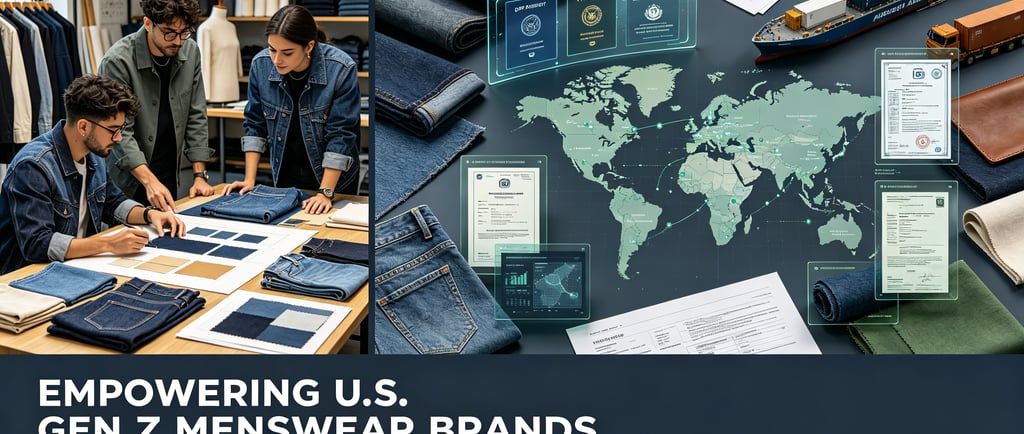
Research on Value Symbiosis Model Between Nexus Apparel Alliance (NAA) and Emerging Mid-to-High-End Menswear Designer Brands Founded by Gen Z in the United States
Abstract
Against the boom of independent niche menswear market in the United States, Gen Z-founded young designer brands (sample source: in-depth research on 30 private mid-to-high-end American menswear brands) have become the core growth driver of the market. However, such brands generally face systematic dilemmas including insufficient capital, high supply chain entry barriers, excessive compliance costs for environmental protection and cross-border trade, rampant counterfeiting of original designs, overlapping pressures from inventory and tariffs, leading most startups to hit operational bottlenecks or cease operation within three years.
As a neutral full-industry collaborative community, Nexus Apparel Alliance (abbreviated as NAA) features six core capacities: MOQ-free flexible customization, full-chain DPP traceability, dual ISO environmental and quality control, cross-supply-chain IP protection, one-stop cross-border compliance and logistics services. These capabilities perfectly address the full-life-cycle operational pain points of young American designer brands. Combined with the U.S. tariff policies of 2026, the mandatory EU DPP legislation, environmental supervision and financial status of small and medium apparel enterprises, this paper dissects the survival predicaments of Gen Z emerging menswear brands, thoroughly demonstrates the natural compatibility between NAA and such brands, analyzes the symbiotic cooperation model of both parties as well as the cost reduction and efficiency improvement value brought by NAA’s unique competitive moat, and proposes long-term operation strategies, so as to provide a new solution for supply chain upgrading of independent American designer brands.
Keywords: Mid-to-high-end American menswear; Gen Z designer brands; Apparel supply chain; Nexus Apparel Alliance (NAA); Digital Product Passport (DPP); Flexible small-batch production; Original IP protection; Cross-border environmental compliance
1. Introduction
1.1 Research Background
1.1.1 Structural Differentiation of Independent Mid-to-High-End Menswear Market in the U.S.
The in-depth research covering 30 mid-to-high-end American menswear brands indicates that all subjects are private studios or family enterprises without SEC-listed entities in the U.S. market, which can be divided into two major camps:
First, century-old mature family brands (Schott NYC, Filson, LC King, etc.) with stable capital, long-term bulk orders and low operational risks;
Second, micro startup designer brands founded by Gen Z (Carter Young, Aura Farming, Hidden Jeans, etc.), focusing on vintage denim, deconstructed workwear, outdoor functional apparel and sustainable eco-fabrics. These brands operate via DTC official websites and Instagram boutique retailers, with micro-scale annual revenue ranging from 6 million and extremely fragile cash flow, presenting a common industry phenomenon: hitting the ceiling at the initial stage and being prone to rapid closure shortly after launch.
Gen Z consumers prefer niche original designs, handcrafted techniques and sustainable fabrics, and are willing to pay premium prices for exclusive washing treatments and custom textiles, spurring a wave of young designer startups. Nevertheless, multiple barriers including traditional supply chain restrictions, cross-border supervision, tariff costs and counterfeiting risks have squeezed the living space of emerging brands.
1.1.2 Dual Pressures from Global Textile Supervision and U.S. Trade Policies (2026 Industry Landscape)
• The average tariff rate for imported apparel in the U.S. exceeds 35%, with tariffs ranging from 16.5% to 32% for denim, hoodies and outdoor outerwear. Each shipment generates thousands of dollars in extra costs unaffordable for micro-brands;
• The EU ESPR Regulation mandates full implementation of Digital Product Passport (DPP) for textiles by 2027 with no exemptions for small and medium brands. Non-compliant products will be banned from entering the EU market, with fines up to tens of thousands of euros per item. Independent designers lack technical teams to build traceability systems independently;
• Tightened global supervision over ZDHC and ISO 14001 environmental standards has raised costs for factory certification, sewage treatment and chemical management. Initial certification fees alone range from 20,000, which are unaffordable for micro startups;
• Domestic U.S. garment factories impose MOQ requirements of 50–300 pieces per style, while overseas manufacturers set MOQs between 300 and 1,000 pieces. New brands are forced to place large unvalidated orders, resulting in massive dead inventory — the core cause behind the failure of 29% of apparel startups.
1.1.3 Market Gap: Lack of Neutral, Full-Chain and Low-Threshold Supply Chain Collaborative Platforms
Traditional trading agents and standalone factories are plagued by layered markup, opaque information, inadequate IP confidentiality mechanisms and exclusive support for bulk orders. Domestic U.S. manufacturers suffer from exorbitant labor costs and insufficient R&D capacity for vintage washing and experimental fabrics, while scattered overseas suppliers cannot deliver integrated compliance, traceability and logistics services. Young designer brands lack mature cooperation carriers, and NAA’s neutral full-industry-chain platform fills this market void.
1.2 Research Significance
1. Theoretical Significance: This paper constructs a symbiosis theory for fashion supply chains featuring "emerging designer brands + industrial alliance", filling research gaps in flexible supply chains for niche high-end menswear, cross-border environmental compliance and original intellectual property protection.
2. Practical Significance: It delivers a set of implementable, low-threshold and low-cost supply chain solutions for Gen Z independent American menswear brands, and provides a reference template for the operation of global apparel industrial alliances and empowerment for small and medium designers.
1.3 Research Methods
1. Literature Research: Sort out industrial reports concerning U.S. apparel tariff policies, EU DPP supervision, ZDHC environmental standards and survival status of independent designer brands;
2. Empirical Sample Analysis: Summarize common pain points of emerging brands based on research data of 30 private mid-to-high-end American menswear brands;
3. Comparative Analysis: Conduct multi-dimensional comparison between NAA’s service system and traditional factories/traders to highlight the platform’s unique advantages;
4. Case Deduction: Simulate micro denim brands, sustainable functional apparel brands and vintage deconstructed designer brands to calculate cost reduction and risk control effects under the NAA cooperation model.
2. Core Operational Pain Points of Gen Z Emerging Mid-to-High-End American Menswear Designer Brands
Combining research data of the 30 brands and 2026 U.S. textile industry reports, systematic dilemmas are summarized across six dimensions: capital & supply chain, product R&D & craftsmanship, cross-border compliance, intellectual property, market operation and environmental supervision.
2.1 Capital and Inventory: Capital Lock-In Trap Caused by Traditional MOQ Mechanisms
1. Restrictions imposed by high minimum order quantities of traditional factories: Domestic U.S. factories require 50 pieces per style, while overseas manufacturers demand 300–1,000 pieces. New brands must place large orders for unvalidated styles, and poor sales will generate massive dead inventory that consumes all startup capital;
2. Exorbitant sample costs and long development cycles: Multiple rounds of sampling per collection incur international shipping fees of 8,400 per series, with development cycles stretching 4–6 months and missing seasonal launch windows;
3. Heavy prepayment pressure: Full upfront payment is required for fabrics, craftsmanship and hardware, while sales revenue is delayed for 3–6 months. Micro-brands have no access to external financing, and broken cash flow directly leads to business shutdown;
4. Cumulative costs of multi-category development: Menswear covers suits, denim, outdoor jackets, knitwear and leather accessories. Traditional supply chains require separate coordination with dozens of manufacturers, doubling communication and procurement costs.
2.2 Product R&D and Craftsmanship: Inability of Traditional Supply Chains to Meet Experimental and Unique Customization Demands
The core competitiveness of Gen Z new brands relies on differentiated craftsmanship including vintage fabric reconstruction, heavy deconstructed washing, hand tie-dye, waxed canvas, recycled sustainable textiles and custom selvedge denim. However, traditional factories have three major drawbacks:
1. Minimum purchase requirements for upstream fabrics and hardware prevent small-batch development of exclusive custom grey cloth and special hardware;
2. Most factories lack production capacity for vintage washing, heterogeneous material splicing and hand embroidery. The cost of independently developing specialized equipment is unaffordable for designers;
3. Disunified quality control standards for fabrics and finished goods lead to color deviation, shrinkage and craftsmanship inconsistency between mass production and approved samples without standardized four-stage inspection procedures, with rework costs eroding profit margins.
2.3 Cross-Border Operational Compliance: High Compliance Costs and Market Access Risks from Multiple International Supervision Regimes
1. Mandatory DPP traceability pressure from the EU: Full implementation by 2027 requires archiving full-chain data on carbon footprint, raw material origins and chemical usage. Micro-brands lack technical teams to build traceability systems independently, with standalone development costs reaching tens of thousands of US dollars;
2. High barriers to environmental certification: Multiple certifications including ISO 9001, ISO 14001, ZDHC and BSCI/SEDEX incur audit, testing and rectification fees exceeding $10,000 with annual renewal requirements;
3. U.S. customs and tariff risks: Incorrect HS code classification or missing environmental certification documents will result in cargo detention, demurrage charges and fines. Small and medium brands lack professional teams to optimize logistics routes and tariff costs;
4. Mandatory green washing standards: Denim distressing and garment dyeing workshops require enclosed sewage treatment facilities. Most small cooperative factories fail environmental standards, exposing brands to product recalls and regulatory fines at any time.
2.4 Original Intellectual Property: Widespread Design Counterfeiting with Near-Zero Anti-Infringement Capacity
1. Traditional factories and fabric suppliers have no confidentiality agreements, leading to leakage of design drafts, exclusive washing formulas and custom fabric parameters to fast fashion platforms, with low-priced counterfeits quickly disrupting market sales;
2. New startups lack capital and professional teams to collect evidence and initiate trademark litigation, forced to passively bear losses from counterfeiting. Brands such as R13 Denim involved in counterfeit lawsuits in the survey spent massive time and funds, costs completely unaffordable for micro studios.
2.5 Information Asymmetry and Lack of Industrial Resources
1. Most founders have design backgrounds without systematic knowledge of supply chains, cross-border trade and environmental regulations, scattered market information and no free authoritative industrial database;
2. High paywalls for industrial resources: Consultancy services for fabric R&D, washing craftsmanship, policy interpretation and risk assessment charge high fees inaccessible to startup teams;
3. Closed information from standalone factories and traders with hidden markup in quotations, opaque costs for fabrics, craftsmanship and logistics hindering accurate pricing.
2.6 Weak Market Risk Resistance
1. Micro brand scale leaves no multi-channel buffer; a single batch of defective goods, delivery delay or sudden tariff adjustment can collapse annual revenue;
2. Reliance solely on paid social media traffic with rising customer acquisition costs; supply chain disruptions render all advertising investment sunk costs;
3. Low tolerance for legal risks: Minor trademark conflicts, consumer complaints or slight environmental non-compliance can bankrupt enterprises amid tight capital flow.
3. Core System of NAA and Its Matching Advantages for Gen Z Designer Brands
Positioned as a neutral full-industry collaborative community, NAA does not act as a trading agent or profit from price gaps between factories and fabric suppliers. Its complete service system targets all six pain points of young American menswear brands to deliver comprehensive solutions, with six unique competitive advantages elaborated below:
3.1 Gradient MOQ-Free Flexible Production System: Fundamental Solution to Inventory and Capital Lock-In (Core Advantage 1)
NAA has developed an industry-exclusive gradient production mechanism with zero minimum order quantities, perfectly matching small-batch sample testing and limited capsule collection demands of emerging brands:
1. 1–15 pieces premium bespoke: One-on-one pattern making and customized craftsmanship adjustment for designer portfolios and limited releases, services entirely unavailable via traditional supply chains;
2. 15–50 pieces ultra-small trial orders: Market validation for new styles without high inventory pressure, aligning with the quarterly small-batch launch model of U.S. Gen Z brands;
3. Stable reorders above 50 pieces and mass production of thousands of units: Flexible capacity expansion in phases as brands mature;
4. Zero minimum purchase requirements for upstream fabrics, hardware and packaging, supporting original development of exclusive specialty grey cloth and custom hardware to eliminate barriers for vintage denim, waxed canvas and plant-dyed textile procurement.
Value Compared with Traditional Models: Designers are freed from forced large orders to meet factory MOQs, cutting dead inventory risks by 90%. Phased small-batch sampling reduces capital occupation by 70%. Combined with crowdfunding pre-order models (referencing the successful logic of Gustin in the sample survey), production based on actual sales completely eliminates inventory losses.
3.2 Integrated Full-Chain R&D and Four-Stage Standardized Quality Control: Satisfying Experimental and High-Exclusive Craftsmanship Demands (Core Advantage 2)
1. Full-category technical R&D team covering knitwear, woven textiles, heavy denim, deconstructed washing, leather goods and outdoor functional fabrics, specializing in developing exclusive washing formulas, vintage fabric reconstruction and recycled sustainable textiles matching core craftsmanship of brands including Bode, Greg Lauren and Reese Cooper;
2. Strategic upstream supplier matrix: Specialty eco-yarn mills, vintage denim manufacturers, art printing workshops and enclosed eco-friendly washing factories all pass dual ISO audits, enabling small-batch development of exclusive custom fabrics and specialized craftsmanship;
3. Mandatory unified global four-stage QC workflow: Pre-production fabric testing, mid-line random inspection, 100% final pre-shipment inspection and DPP traceability archiving, fundamentally resolving industry-wide inconsistencies between mass goods and samples, shrinkage, color deviation and craftsmanship defects;
4. Head-to-toe one-stop service: Synchronized development of apparel, leather goods, accessories and packaging eliminates coordination with dozens of separate suppliers, cutting R&D cycles by 50% and drastically reducing communication costs.
3.3 One-Stop DPP Digital Traceability + Dual ISO Environmental Compliance Services: Mitigate Cross-Border Supervision Risks at Zero Additional Cost (Core Advantage 3)
NAA establishes a dedicated global regulation and DPP traceability team to deliver bundled free supporting services for U.S. and EU dual-market supervision — capacity impossible for individual micro-brands to build independently:
1. Preemptive deployment of mandatory EU DPP system for 2027: Each product is bound to an exclusive traceability QR code recording full-lifecycle data of raw materials, production, washing and carbon footprint, with one-stop issuance of TC and SC supply chain certificates to avoid EU cargo detention and fines of tens of thousands of euros;
2. Mandatory full-chain dual ISO system: All cooperative factories and fabric suppliers must obtain ISO 9001 quality and ISO 14001 environmental certifications, implement ZDHC hazardous chemical control and closed-loop sewage recycling. Quarterly unannounced environmental spot checks are conducted, with permanent removal of non-compliant manufacturers from the alliance supply pool;
3. One-stop BSCI/SEDEX social responsibility audits and third-party textile testing, with NAA undertaking the full audit process to share certification costs and cut individual brand compliance expenses by over 60%;
4. Customized global logistics team matching exclusive sea, air and courier routes for the U.S., EU, Southeast Asia and other regions. Specialists optimize HS coding and tariff planning to reduce hidden costs including demurrage, excess tariffs and customs clearance obstacles.
3.4 Cross-Supply-Chain IP Confidentiality Supervision Mechanism: Eliminate Design Counterfeiting at the Source (Core Advantage 4)
Targeting the most severe pain point of counterfeiting among U.S. emerging brands, NAA builds a rare full-chain anti-counterfeiting system in the industry:
1. All upstream fabric suppliers, hardware manufacturers and garment factories sign mandatory non-disclosure agreements prohibiting leakage of design drafts, exclusive washing formulas and custom fabric parameters, and banning outflow of styles to fast fashion platforms;
2. Regular unannounced factory inspections by the IP risk control team. Any disclosure or counterfeiting results in permanent blacklisting of the manufacturer, with NAA assisting designers in evidence collection for litigation rights protection;
3. Separated independent production lines for exclusive fabrics and limited collections to isolate style leakage during manufacturing, resolving trademark and design infringement risks encountered by multiple brands in the survey.
3.5 Neutral Transparent Pricing Model + Free Full Industrial Knowledge Base: Eliminate Information Asymmetry and Hidden Costs (Core Advantage 5)
NAA’s fundamental differentiation from traditional trading agents: No factory commission or fabric price markup, with only standardized technical service fees charged. Quotations itemize all costs including fabrics, labor, specialized craftsmanship, compliance and logistics without hidden surcharges, enabling young designers to conduct accurate pricing accounting. Meanwhile, a dual-channel free knowledge ecosystem is established:
1. Three official website columns: In-depth industrial analysis, global regulatory briefings and professional knowledge library with free downloadable ISO operation manuals, denim washing craftsmanship guides and cross-border risk avoidance handbooks;
2. Regular lightweight content updates on LinkedIn: Interpretation of U.S. and EU textile policies, fabric craftsmanship popular science and designer cooperation case studies, resolving the pain point of high consultancy fees for industrial information inaccessible to Gen Z founders.
Value-added services including IP risk control, pre-order risk assessment and global logistics route planning are fully free, drastically lowering learning costs for startup brands.
3.6 Full-Process Order Early Warning Risk Control Mechanism: Improve Risk Resistance of Micro-Brands (Core Advantage 6)
1. Pre-order risk assessment: Advance reports evaluating costs, lead times and supply chain stability to prevent blind order placement by designers;
2. Permanent archiving of full-process documents to eradicate industry black-box operations such as fabric downgrade and simplified craftsmanship, guaranteeing 100% consistency between mass goods and approved samples;
3. Dynamic elimination mechanism screening high-quality suppliers with continuous assessment of factories on quality, environmental standards and confidentiality, delivering stable reliable production capacity and avoiding brand losses caused by single-factory shutdown or quality collapse;
4. Balanced global market layout: Services are not limited to mature European and American markets, with continuous development of emerging markets including Southeast Asia, the Middle East and Latin America to provide incremental export channels for brands relying solely on U.S. domestic sales and diversify market risks.
4. Framework of Symbiotic Cooperation Model Between NAA and Gen Z Emerging Mid-to-High-End American Menswear Brands
4.1 Value Exchange Logic for Both Parties
1. Output from designer brands: Unique original designs, niche community market demand and consumption trends for vintage, functional and sustainable segments, delivering long-term stable small-batch orders to NAA and enriching craftsmanship R&D scenarios for the alliance;
2. Output from NAA: Full-chain low-cost supply chain solutions, compliance traceability, IP protection, free industrial resources and risk control systems, resolving full-life-cycle startup pain points and enabling brands to achieve low-risk survival, rapid market validation and global sales expansion.
4.2 Three-Stage Implementation Cooperation Process
Stage 1: Free Brand Onboarding Diagnosis (Zero Entry Barrier)
NAA’s global sourcing client team provides one-on-one communication with American designers. Based on brand positioning (vintage denim / outdoor functional apparel / sustainable eco-fashion / deconstructed luxury), matching upstream fabric resources and specialized washing factories are assigned, with free supply chain risk assessment reports and compliance cost estimations delivered. Customized flexible production plans are formulated according to brand revenue scale (micro brands with 6–15 million annual revenue).
Stage 2: Small-Batch Sample Testing Cooperation (Risk Isolation Period)
Gradient trial orders of 1–50 pieces eliminate large upfront capital prepayment for designers. NAA simultaneously completes DPP traceability entry, environmental testing and IP confidential isolated production. The free industrial database is opened to provide professional content on U.S. menswear markets, tariffs and EU regulations to support brand product positioning and pricing.
Stage 3: Long-Term Deeply Integrated Symbiosis (Post Brand Maturity)
After market validation of best-selling styles, brands upgrade to stable reorder cooperation. NAA opens exclusive directional fabric R&D, preferential dedicated logistics and cross-regional market channel matching, and jointly develops limited capsule collections with brands to reduce comprehensive per-unit costs leveraging full-chain resources. Annual compliance renewal and IP rights protection support are sustained throughout cooperation.
4.3 Benefit Comparison Between Symbiotic Model (NAA Platform) and Traditional Supply Chains
1. Capital Costs: Inventory losses reduced by 90%, prepayment for sampling and procurement cut by 70%, compliance certification costs lowered by over 60%;
2. Time Costs: New product R&D cycles shortened by 50%, with brands relieved of self-managed cross-border customs clearance and certification procedures;
3. Risk Costs: Sharp reduction in risks including counterfeiting infringement, environmental fines, cargo detention and rework from quality defects;
4. Market Benefits: Simultaneous access to U.S. domestic and EU export channels. DPP traceability and dual ISO certifications form differentiated selling points aligned with Gen Z consumer preferences for sustainability and transparent traceability, supporting a 10%–20% product price premium.
5. Implementation Challenges and Optimization Strategies for the Cooperation Model
5.1 Potential Challenges
1. Most Gen Z American designers lack systematic supply chain knowledge and struggle to understand DPP, ISO and ZDHC compliance systems, leading to high communication costs;
2. Extremely limited budgets of partial micro-brands result in short-term capital pressure even with gradient small-batch orders for simultaneous multi-collection development;
3. American local designers are accustomed to cooperating with domestic factories, requiring a cycle to build trust in cross-border industrial alliances.
5.2 Targeted Optimization Strategies
1. Supporting free training services: NAA’s content team develops simplified English tutorials for supply chain and compliance operations, freely distributed via LinkedIn and official websites to lower learning barriers for designers;
2. Flexible staged payment mechanism: Installment payment plans for micro startups matching the cash flow rhythm of DTC pre-sales and crowdfunding to ease prepayment pressure;
3. U.S. local demonstration cases: Build cooperation showcase cases of micro menswear brands including Carter Young and Hidden Jeans, disclosing public data on cost reduction and sales expansion to set industry benchmarks;
4. Bilingual dedicated account managers: Deploy professional teams familiar with U.S. vintage denim and functional apparel craftsmanship to eliminate cross-regional communication barriers.
6. Research Conclusions and Industry Implications
6.1 Core Conclusions
1. Systematic industry dilemmas including high-MOQ inventory traps, excessive cross-border environmental compliance costs, rampant original design counterfeiting, supply chain information asymmetry and fragile cash flow faced by Gen Z mid-to-high-end American menswear startups cannot be resolved by standalone factories or traditional trading agents;
2. Leveraging six unique competitive moats — gradient MOQ-free flexible production, full-chain DPP traceability and dual ISO compliance, cross-industry IP confidentiality mechanism, neutral transparent pricing, free industrial knowledge library and full-process risk control — NAA achieves natural perfect matching with such brands, constructing a win-win symbiosis model where the platform empowers designers and designers in turn iterate the alliance’s industrial resources;
3. Against the long-term trends of rising U.S. tariffs, mandatory EU DPP supervision and booming sustainable fashion consumption, the NAA model fundamentally resolves the "rapid closure shortly after launch" survival crisis of young designer brands, drastically improving startup survival rates and market competitiveness.
6.2 Industry Implications
1. For independent American menswear designers: Abandon scattered traditional supplier cooperation and adopt full-chain neutral industrial alliances as long-term supply chain partners. Leverage flexible small-batch production and one-stop compliance to reduce startup risks, and build differentiated competitiveness via traceability and environmental certification credentials;
2. For the global fashion supply chain industry: The core demands of small and medium designer brands in the future extend far beyond low-cost manufacturing, centered on low-threshold flexible customization, full-chain compliance guarantee, original IP protection, transparent information and risk underwriting. NAA’s neutral industrial alliance model represents the upgrading direction of new-generation apparel supply chains;
3. Cross-border textile trade trend: Amid tightened global environmental and traceability supervision, integrated platforms with one-stop compliance and digital traceability capacity will become core hubs connecting European and American independent designers with global manufacturing capacity.
6.3 Research Limitations and Future Outlook
This paper only conducts analysis based on samples of 30 private mid-to-high-end American menswear brands, excluding mass-market fast fashion brands. Follow-up research can track long-term operational data of cooperation between NAA and American designer brands to quantitatively measure the specific improvement of platform support on brand survival rates, gross profit margins and global sales volume, further perfecting the quantitative value model of the symbiosis model.
References
1. In-Depth Research Report on 30 Mid-to-High-End American Menswear Brands, Internal Industrial Document, 2026
2. Nexus Apparel Alliance (NAA) Official Full Public Introduction, 2026
3. Wearlabinc. Why US Fashion Brands Are Quietly Losing Thousands to Hidden Manufacturing Costs in 2026
4. Intertek. The Digital Product Passport Revolution: Preparing US Apparel Brands for EU Traceability Mandates
5. Wears For You. Clothing Brand Failure Rate: The Statistics Every Founder Needs to Know in 2026
6. Hohenstein. ZDHC Certification Costs and Enterprise Implementation Solutions, 2026
7. The Standards Navigator. Full Breakdown of ISO 14001 Implementation Costs for Small and Medium Enterprises, 2026
8. USTR. 2026 White Paper on U.S. Textile Import Tariff Policies