we do not pursue commercial profit. We do not serve fast fashion or mass low-cost production. Our mission is industrial upgrading for the fashion supply chain. We are not a trading platform,

The Eternal Value and Sustainable Vitality of Traditional Artisan Denim:
Vintage Craftsmanship, Regenerative Upcycling and Lifelong Humanistic Value
Don Choi
6/16/20267 min read
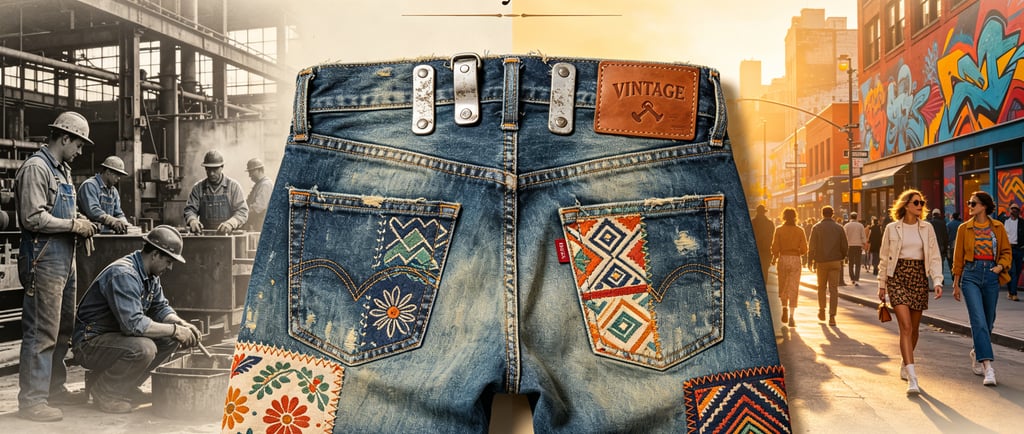
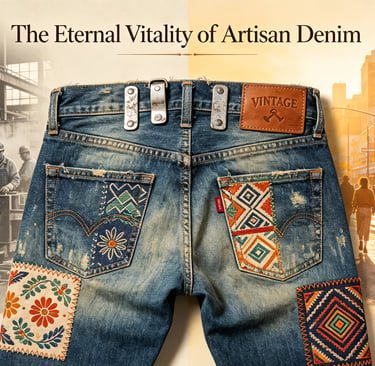
The Eternal Value and Sustainable Vitality of Traditional Artisan Denim: Vintage Craftsmanship, Regenerative Upcycling and Lifelong Humanistic Value
Abstract
Denim originated as functional labourer workwear in Western society, defined by durability, simplicity and practicality. Over centuries, denim has evolved from basic industrial uniform into a global fashion icon. However, the fast-fashion industry has fundamentally transformed denim’s material composition, manufacturing logic and life cycle. Mass-market denim today largely adopts synthetic blended fibres, high-speed mechanised weaving and disposable design concepts, resulting in short garment lifespans, massive textile waste and the loss of traditional denim’s original craft and eco-friendly essence. In contrast, traditional artisan denim produced with vintage shuttle looms, ring-spun slub yarn and natural indigo dyeing carries irreplaceable artistic texture, extreme durability, infinite repairability and unique sentimental value. This paper comprehensively compares traditional handcrafted denim and modern mass-produced fast-fashion denim, demonstrating that heritage craftsmanship, regenerative upcycling capability, ultra-long life cycle and personalised modification potential make artisan denim the most sustainable, humanistic and artistically valuable form of modern textile wear.
1. Introduction
Denim’s earliest industrial purpose was to create sturdy, long-lasting uniforms for workers. Early European and American denim prioritised heavy pure cotton fabric, loose functional silhouettes and abrasion-resistant construction. With global cultural evolution, different regions formed distinct denim aesthetics. Europe emphasises natural raw texture, the United States develops both high-end premium craftsmanship and low-cost mass production, while Japan inherits ancient indigo dyeing techniques from kimono craftsmanship and becomes the global benchmark for high-quality heritage denim.
Nevertheless, contemporary fast fashion has completely restructured the denim industry. In order to pursue rapid iteration and low-cost profit, most commercial denim abandons 100% pure cotton raw materials, mixes polyester and elastane, and adopts high-speed loom mass production. This industrial model creates low-priced, trend-driven denim with extremely short usable lifespans, causing severe environmental burden and resource waste.
This study argues that true denim value lies not in trendy appearance or low-cost accessibility, but in traditional artisan craftsmanship, natural textile characteristics, infinite regenerative vitality and lifelong companionship value that modern fast fashion cannot replicate.
2. Industrial Background: Global Denim Development and Craft Diversification
2.1 Original Workwear Philosophy of Traditional Denim
Authentic vintage denim was manufactured entirely for durability. Early factories used thick ring-spun cotton yarn and low-tension shuttle looms to produce heavyweight fabric capable of withstanding long-term labour friction and extreme daily wear. The core design principle was repairability, stability and multi-year serviceability rather than aesthetic decoration.
2.2 Regional Craft Differentiation
European premium denim persists in natural and minimal processing, retaining the original texture and organic appearance of raw cotton fabric.
The United States forms a dual-track market structure. High-end American denim focuses on long-staple cotton, hand rope dyeing, solid brass hardware and genuine leather branding to maintain premium quality. Meanwhile, mid-to-low-end commercial denim prioritises market affordability, utilising blended fabrics and outsourcing mass production to Eastern Europe, the Middle East and Africa to reduce labour costs.
Japan represents the highest standard of traditional denim inheritance.. Based on centuries-old indigo dyeing experience from traditional kimono production, Japanese craftsmen precisely control yarn thickness, dye penetration and natural oxidation processes. Vintage shuttle looms preserved in Okayama and Fukuyama produce slub-textured selvedge denim with unique organic grain and natural fading potential. Japanese consumers treat high-quality artisan denim as long-term wearable collectibles rather than disposable fashion items.
3. Technical and Artistic Value of Vintage Loom Craftsmanship and Slub Yarn
3.1 Vintage Shuttle Loom: Imperfection as Core Aesthetic Value
Modern industrial high-speed air-jet looms operate under extreme tension, producing perfectly flat, uniform and identical fabric with zero texture variation. Although efficient, this mechanised standardisation eliminates all organic textile personality.
In comparison, vintage slow-speed shuttle looms work with low yarn tension and natural machine vibration. The reciprocating wooden shuttle creates irregular yarn thickness and natural slub texture across the fabric surface. These subtle uneven textures were once regarded as manufacturing defects in early industrial history but are now recognised as the unique artistic soul of heritage denim.
Furthermore, traditional shuttle looms produce authentic selvedge edges that prevent fraying without extra chemical or mechanical treatment. The continuous yarn structure enhances durability and enables decades of wear, repeated repairing and reconstruction.
Due to extremely low production efficiency, scarce functional vintage machinery and high manual maintenance costs, shuttle-loom denim is inherently limited in output, creating natural rarity and collectible value.
3.2 Natural Slub Yarn and Unique Fading Art
Only traditional ring-spun machinery can generate natural slub yarn with inconsistent thickness. Thick yarn sections absorb more natural indigo pigment, while thinner sections wear faster during daily friction. After years of wearing, the fabric develops unique vertical fading lines known as tate-ochi.
Every individual’s posture, movement frequency and lifestyle create exclusive fading patterns. This means each pair of artisan denim evolves into a completely unique textile artwork that cannot be duplicated by any industrial mass-production method. Mass-produced uniform yarn denim fades flat, dull and homogeneous, possessing no personalised temporal texture.
3.3 Natural Indigo Rope Dyeing: Traditional Eco-Friendly Craft
Traditional rope dyeing repeatedly dips and oxidises cotton yarns, colouring only the yarn outer layer while retaining pure white cotton cores. As the garment ages and wears, the white core gradually reveals, forming rich layered contrast and three-dimensional vintage tones.
Natural plant indigo is skin-friendly, antibacterial and environmentally sustainable. Each dyeing cycle creates subtle colour differences, ensuring every fabric batch carries organic handmade individuality. In contrast, modern synthetic chemical dyeing creates rigid, lifeless colour results and produces massive industrial wastewater pollution.
4. Artisan-Made Denim versus Mass-Produced Fast-Fashion Denim
4.1 Production Philosophy Difference
Fast-fashion denim adopts segmented assembly-line manufacturing. Each worker performs only one repetitive mechanical procedure. The whole production process prioritises speed, quantity and cost reduction. Garments are intentionally designed with thin fabric, weak stitching and low-grade accessories to shorten replacement cycles and stimulate continuous consumption.
Artisan denim follows complete handmade logic. A single craftsman independently completes pattern drafting, cutting, stitching, hardware installation and final quality inspection. Each detail is manually adjusted according to fabric texture and structural characteristics. The production process takes several hours for one single piece, emphasising craft precision, structural durability and timeless aesthetics rather than seasonal trends.
Premium brass hardware, vegetable-tanned leather patches and heavy-duty stitching gradually oxidise and develop natural patina over time, recording the owner’s life experience and forming irreplaceable emotional value.
4.2 Environmental Gap Between Two Industrial Systems
More than 90% of modern fast-fashion denim contains synthetic fibres such as polyester and elastane. These blended materials cannot biodegrade. Discarded denim accumulates in landfills for centuries or releases toxic pollutants during incineration, creating severe ecological pressure.
Traditional 100% pure cotton artisan denim is fully biodegradable, extremely durable and infinitely repairable. Statistics show that long-lifespan handmade denim reduces up to 70% carbon footprint compared with continuously purchased fast-fashion alternatives.
5. Infinite Regenerative Vitality: Denim’s Rebirth through Upcycling and Customisation
This study proposes a core innovative argument: genuine artisan denim never dies, it only transforms.
When mass-market fast-fashion garments become torn, worn out or faded, they are immediately eliminated and discarded. However, thick pure cotton heritage denim retains powerful structural resilience even after decades of wear. Severe holes, frayed edges and worn patches do not terminate the garment’s lifecycle; instead, they become the foundation of artistic rebirth.
With modern eco-friendly printing technology, low-carbon personalised patterns, hand patchwork, decorative stitching, custom metal accessories, leather binding and innovative mending techniques, worn-out denim can be completely reconstructed and redesigned. Every repaired scar and modified detail records 20 to 30 years of personal life trajectory, turning old clothing into exclusive wearable memorabilia with irreplicable time value.
6. Ultra-Long Lifespan: Denim’s Companionship Value Surpasses Living Creatures
Another unique humanistic argument established in this research is the extraordinary lifelong companionship value of artisan denim.
The average lifespan of common domestic pets such as cats and dogs ranges from 10 to 15 years. In comparison, a well-maintained pair of handmade vintage denim can faithfully accompany its owner for 20, 30 years or even longer, crossing youth, career growth and middle life stages.
Unlike living companions that face inevitable ageing and death, artisan denim maintains continuous existence and evolves together with the wearer. It accumulates memories, records lifestyles and preserves personal history stably and permanently. In this sense, traditional denim carries more enduring sentimental and commemorative value than short-lived living companions.
7. Workwear Texture and Unlimited Personalised Creative Modification
Traditional denim’s thick, rugged, heavy-duty workwear structure provides extremely high modification tolerance that thin fast-fashion fabric cannot support.
The sturdy textile property allows diverse functional and aesthetic upgrades, including sew-on tactical buckles, tool hanging loops, work accessory attachments, hand-bound decorations, custom eco-print graphics and personalised patch layouts. Wearers can freely bind, stitch, hang, paste and reconstruct different hardware and accessories according to personal occupation, lifestyle and aesthetic preference.
This creative freedom transforms artisan denim from passive industrial products into actively evolving, self-shaped wearable artworks. Each modified detail represents the owner’s unique creativity and personality, forming a completely individualised style that standardised factory production can never achieve.
8. Deficiencies of Modern Sustainable Fashion Certification Systems
Current global fashion sustainability certifications mainly focus on new recycled materials, innovative chemical eco-processing and waste reduction mechanisms. However, they universally overlook denim’s most primitive and most powerful sustainable attribute: extreme durability, repairability and infinite regenerative life cycle.
The fast-fashion industry misleads public cognition by equating “environmental protection” with new material technology, while ignoring the most fundamental and effective sustainable logic: reducing consumption through ultra-long product lifespan.
Traditional artisan denim perfectly embodies the highest level of circular sustainability — extending garment life indefinitely through craftsmanship, maintenance, repair and upcycling, thereby reducing resource exploitation, industrial pollution and textile waste at the source.
9. Conclusion
Traditional artisan denim crafted with vintage shuttle looms, natural slub yarn and organic indigo dyeing represents the pinnacle of textile craftsmanship, environmental sustainability and humanistic value.
Different from disposable fast-fashion denim trapped in endless consumption loops, heritage handmade denim possesses natural artistic texture, industrial durability, infinite repair and regeneration capability, ultra-long companionship life cycle exceeding living pets, and unlimited personalised modification potential.
It records personal growth, carries long-term memory value, evolves continuously with the wearer and achieves true circular sustainability without relying on high-tech chemical processing.
This paper concludes that traditional artisan craftsmanship, rather than industrial mass production, defines denim’s greatest eternal value. Protecting vintage textile techniques, promoting slow denim culture and recognising upcycled denim’s artistic and eco-friendly value is essential for future sustainable fashion development.
References
1. Ellen MacArthur Foundation. (2022). Circular Economy in Global Textile and Denim Industry.
2. Denimon & Stridewise Industrial Research Report. Premium Artisan Denim vs Mass-Produced Denim Lifespan Analysis.
3. Okayama Vintage Denim Craft Documentation. Traditional Shuttle Loom Weaving and Natural Rope Dyeing Technology.
4. IRJEdT Academic Journal. Upcycling Sustainability and Carbon Footprint Reduction of Handcrafted Textiles.
5. Sustainable Fashion Institute. Lifespan Comparison of Pure Cotton Heritage Fabric and Synthetic Blended Fabric.